Portuguese Catholicism
Fátima
May–October 1917 · Cova da Iria, Fátima, Portugal · Lúcia dos Santos, Francisco Marto, Jacinta Marto

Cova da Iria, 13 October 1917. Judah Bento Ruah photographed members of the assembled crowd looking skyward.
Source & rights
- What this is
- Documentary record
- Object
- Photograph
- Title
- The crowd at Cova da Iria, 13 October 1917
- Creator
- Judah Bento Ruah
- Date
- 13 October 1917
- Held by
- Published in Ilustração Portugueza, 29 October 1917
- Licence
- Public domain
- This copy
- Hosted at the size published by the source; not altered.
- Retrieved
- 2026-08-29
An administrative record of a report having been made. It documents the reporting, not the thing reported.
The photograph documents the observers, not the thing they were looking at. It establishes the date, the place, the size of the gathering and the direction of everyone's attention, and it establishes nothing whatever about the sky.
Beginning in May 1917, Lúcia dos Santos and her cousins Francisco and Jacinta Marto said they had met a woman at Cova da Iria, near Fátima in central Portugal, whom they came to identify as the Virgin Mary. On their account the meetings recurred through the summer, on the thirteenth of each month.
A sign had been anticipated for October. On the thirteenth a large crowd assembled on wet ground in the rain, and many of those present afterwards described seeing the sun behave in ways they could not account for. Newspapers reported it within days. Photographers were there.
Almost everything about this record is the reverse of what this archive usually has. The witnesses are named and were alive. The dates were announced in advance. The press printed while people could still contradict it. And a camera recorded the crowd - which is not the same as recording what the crowd said it saw.
What the photographs show

Source & rights
- What this is
- Documentary record
- Object
- Document
- Title
- Ilustração Portugueza No. 610, 29 October 1917, pp. 354–355
- Creator
- Ilustração Portugueza
- Date
- 29 October 1917
- Licence
- CC BY-SA 4.0
- This copy
- Hosted at the size published by the source; not altered.
- Retrieved
- 2026-08-29
An administrative record of a report having been made. It documents the reporting, not the thing reported.
The photographs that fixed the event in public memory were printed here, sixteen days later, beside the text that told readers how to see them.
Contemporary photographs establish the presence of the crowd, the site, the weather on the ground and the behaviour of the observers. They do not record the motion or transformation of the sun that many of those observers afterwards described.
This is not a small distinction and it is not a hostile one. The camera was pointed where a camera could usefully be pointed: at the people. Everyone in the frame is looking up and behind the photographer, and the photograph is a good record of that fact and of nothing past it.
The spread reproduced here is how the country met those photographs: printed sixteen days later, in a national weekly, beside a text telling readers what they were looking at. The pictures and their framing arrived together and have travelled together ever since.
Set against the rest of this archive the material is still remarkable. For almost every other record here, no image exists of anybody who reported anything. Here there are several, made on the day, published within weeks, showing the witnesses. It is worth being precise about what that gets us, because being imprecise about it is how a photograph of a crowd becomes a photograph of a miracle.
What the source is
A complex of sources rather than a text: children's testimony taken in 1917, contemporary press reports, photographs made on the day, later statements by adult witnesses, a diocesan inquiry of the 1920s, an ecclesiastical judgement in 1930, memoirs written decades afterwards, and a modern critical edition of the documents.
The photographs reproduced here were published in Ilustração Portugueza on 29 October 1917, sixteen days after the October gathering.
Stated conditions, 13 October 1917
Facts about the reporting, not about the thing reported. Where the sources disagree, the row says so rather than settling it.
- Date
- 13 October 1917
- Location
- Cova da Iria, near Fátima
- Weather
- Rain and wet ground reported beforehand
- Crowd
- Large. Contemporary estimates vary widely and are not reconciled here
- Prior expectation
- Yes - a sign had been announced in advance
- Press present
- Yes, including hostile and secular papers
- Photographic record
- Crowd, site and observers
- Claimed phenomenon
- Solar and sky effects, described by observers
- Instrumental record
- None
- Observed elsewhere
- Not reported by observatories
Source layers
Fátima is not one source at one distance. It is a complex of sources at several distances, and collapsing them into a single score would destroy the only thing that makes it useful here.
1917
The children's testimony, taken at the time, including by officials hostile to it.
1917
Contemporary press, within days and weeks - including the secular Lisbon papers.
1917
Photographs of the site, the crowd and the children.
1917 onward
Statements from other adults present in October, gathered over following years.
1920s
A canonical inquiry, collecting testimony under ecclesiastical procedure.
1930
Ecclesiastical recognition by the bishop of Leiria.
Later
The surviving witness's memoirs, written decades afterwards, and a large devotional literature.
Modern
Documentação Crítica de Fátima - a critical edition assembling the underlying documents. In copyright; linked, not reproduced.
The place changed
A question that applies to every shrine in this archive, and can be answered here with photographs.
1917
Open rural ground, used for grazing.
By 1921
A small chapel stands on the site; the first Mass is said there on 13 October 1921.
March 1922
The chapel is destroyed by an explosion.
After
It is rebuilt.
Now
A sanctuary complex receiving very large numbers of visitors.
The report
No passage reproduced - Excerpt not published - edition and page not yet verified
The contemporary press is quotable and worth quoting: the Lisbon daily O Século carried a first-hand account by a journalist who had gone to be unimpressed. This project has not read that article against a copy of the issue, and prints nothing from it until it has. The magazine pages reproduced on this page are shown as objects, not transcribed.
Why it is in this archive
Because it is the control case for the rest of this collection. Almost every other record here fails for want of contemporary documentation; this one has it, and can therefore be asked the questions the others cannot answer.
The first is what the photographs are evidence of. They establish the date, the place, the size and behaviour of the crowd, and the fact that a great many people were looking up. They do not record the sun doing anything. A photograph of observers is evidence about observers, and this record does not present it as anything else.
The second is the difference between two sets of witnesses. The children reported apparitions and conversation over several months. The October crowd reported effects in the sky on one afternoon. These are different claims, made by different people, resting on different evidence, and running them together - so that the crowd appears to corroborate the apparitions - is the single most common failure in accounts of this episode. This record keeps them apart.
The third is expectation. The crowd was there because a sign had been announced in advance, by children whose earlier statements had already been widely reported. That is not an explanation of what was reported and it is not a dismissal of it. It is an observation condition, and it belongs in the conditions panel with the rain and the absence of instruments, where it can be weighed rather than deployed.
Set beside Montserrat, the contrast is the point of filing both. There, a light in the sky and music, reported by unnamed children in 880, first written down three and a half centuries later. Here, a comparable kind of claim under conditions that let one name the witnesses, date the recurrences, read the hostile press, and look at the ground. What that difference is worth is exactly the question this archive exists to keep open.
The words the source uses
Given in the language they were written in, with a plain rendering. None is treated as equivalent to a term from another tradition.
- Ilustração Portugueza
- the title of a Lisbon illustrated weekly
- The magazine whose issue of 29 October 1917 carried the photographs reproduced here. Named rather than translated, because it is a title and not a description.
- Cova da Iria
- the hollow of Iria
- A place name for a piece of grazing land. In 1917 it named a field.
- Documentação Crítica de Fátima
- critical documentation of Fátima
- The Sanctuary's own multi-volume edition of the underlying documents. That such an edition exists at all is unusual, and it is the reason a researcher can go behind the devotional literature to the 1917 papers.
How close is the source?
The surviving text presents itself as the words of the person who reports the experience.
01 · Reported by
Lúcia dos Santos, Francisco Marto and Jacinta Marto
Named, photographed, and questioned repeatedly at the time.
02 · Questioned by
Parish clergy, local officials and journalists, from 1917
Including people who did not believe them and said so in print.
03 · Separately reported by
Members of the crowd present on 13 October 1917
A different body of witnesses making a different claim. Their statements concern the sky, not the apparitions.
04 · Printed by
Portuguese newspapers and Ilustração Portugueza, October 1917
05 · Photographed by
Judah Bento Ruah, and others present
06 · Investigated by
A canonical inquiry in the 1920s
Ecclesiastical procedure, with its own rules of evidence and its own interest in the outcome.
07 · Recognised by
The bishop of Leiria, 1930
An ecclesiastical judgement about permitted devotion. It is a fact about the church's decision, not about the sky.
08 · Assembled in
Documentação Crítica de Fátima, published by the Sanctuary
A modern critical edition, in copyright. Used as a route to the 1917 documents and not reproduced here.
Source gallery
Every image is labelled with what it is evidence for. Select one to see it whole.
Project Nikolaos annotation
Written by this project. Not part of the source, and not a translation of anything in it.
The cameras were pointed at the crowd. Everybody in the frame is looking at something above and behind the photographer, and the photograph cannot tell us what. I keep returning to this picture because it is an honest image of the exact limit: it proves the looking and nothing beyond it.
Details, provenance and rights
- Experiencer state
- Awake
- Reported agency
- Single personal agency
- Locomotion claim
- None
- Physical trace
- Environmental effect reported · Unresolved
- Witness or speaker
- Lúcia dos Santos, Francisco Marto and Jacinta Marto; and, separately, members of the October crowd
- Recorder / translator
- Contemporary interrogators and journalists; later a diocesan inquiry; later still the witnesses' own memoirs
- Edition
- Ilustração Portugueza No. 610, 29 October 1917; photographs by Judah Bento Ruah and others
- Rights
- May be reproduced from a verified public-domain edition
- Cultural sensitivity
- Context needed
Provenance notes
- The crowd photograph is evidence of a crowd looking upward. It is not, and is nowhere described here as, a photograph of the reported solar phenomenon.
- No numerical crowd estimate is given, because contemporary estimates differ by a factor of several and this project has not adjudicated between them.
- The children's claims and the crowd's claims are kept separate throughout. Nothing here implies the crowd reported seeing the figure the children described.
- This project has not consulted the Documentação Crítica de Fátima volumes, the diocesan inquiry papers, or the original press issues. The magazine pages here are reproduced from public scans.
- The attribution of the children's portrait to Joshua Benoliel is the attribution given on the source record, and is qualified there.
- The photograph of the first Mass at the Capelinha is dated 13 October 1921, four years after the events, and is filed as evidence about the site rather than about 1917.
The 1917 photographs and magazine pages are public domain, with two exceptions: the scans of pages 354–356 were released by their maker under CC BY-SA 4.0, which is recorded on each image and travels with the file. The modern Documentação Crítica de Fátima is in copyright and is linked only.
Read next to this
Chosen for what they can be compared on. The comparison is between the records, not between the things reported.
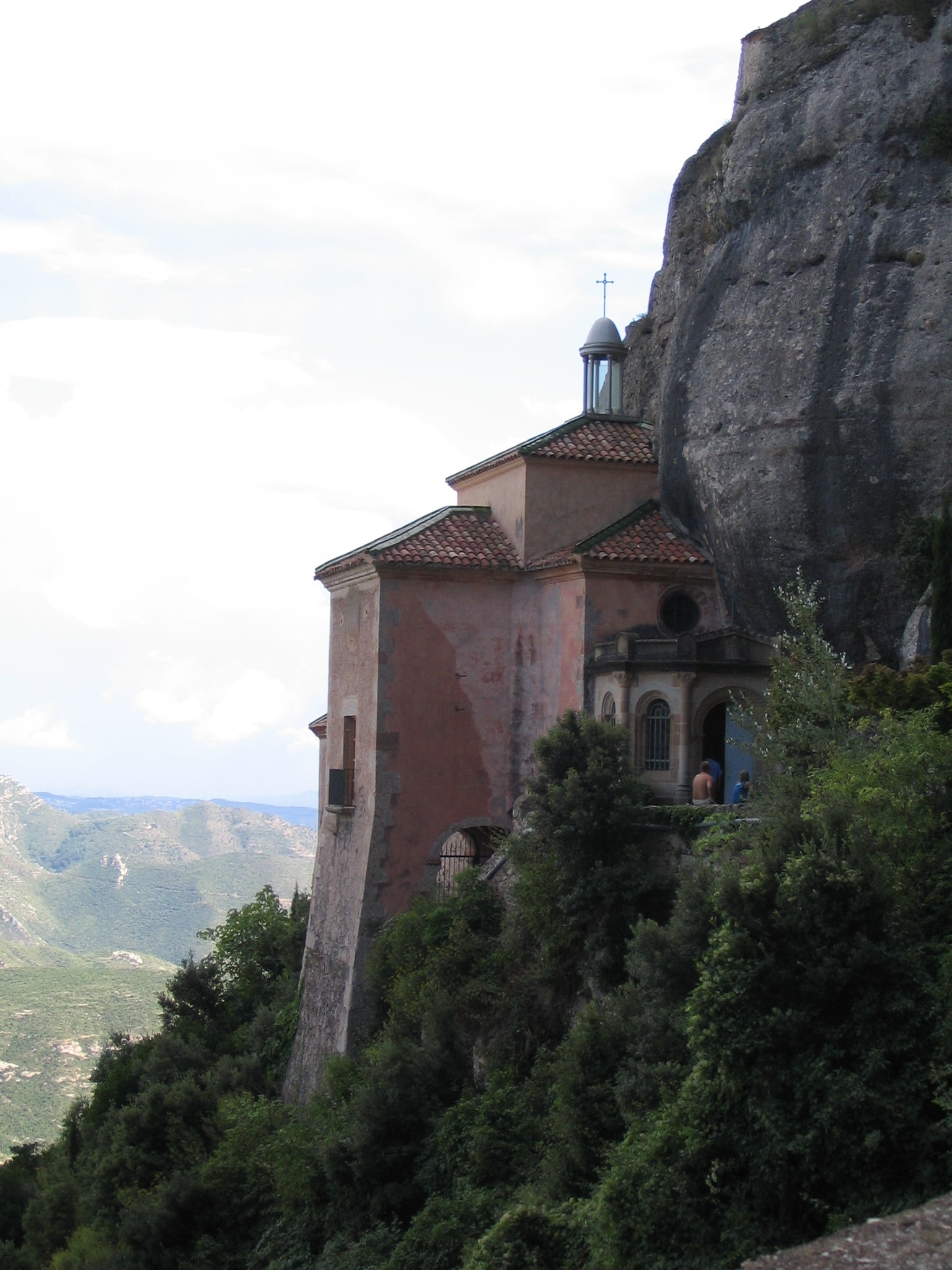
Montserrat
Traditional date 880; first text dated 1239 · Montserrat, Catalonia
A light descends from the sky. Music is heard. A cave is found. The statue now venerated there is some three centuries younger than the story.
Foundation and discovery legend
An apparition and discovery tradition whose surviving textual record begins some three and a half centuries after the event it describes.
