Egyptian Christianity, early monasticism
Life of Antony
4th century · Egypt · Athanasius

Martin Schongauer, Saint Anthony Tormented by Demons, c. 1470–74.
Source & rights
- What this is
- Later depiction
- Object
- Title
- Saint Anthony Tormented by Demons
- Creator
- Martin Schongauer
- Date
- c. 1470–74
- Held by
- The Metropolitan Museum of Art
- Licence
- CC0
- This copy
- Hosted at the size published by the source; not altered.
- Retrieved
- 2026-08-28
Made long afterwards. Evidence about the period that produced it, and about nothing else.
Engraved some eleven hundred years after the life it depicts, in a German printmaking tradition with its own repertoire of composite creatures. The blank ground, the symmetry and the anatomical invention are the workshop's, not the fourth century's.
In the fourth-century Life of Antony, the Egyptian ascetic repeatedly meets beings the text calls demons. They appear in changing forms, they threaten, they speak, they flatter, and sometimes they announce events happening elsewhere that turn out to be true.
What makes the text remarkable is not the visitations. It is that Antony is shown interrogating them. Who are you? Where have you come from? Does an accurate prediction prove who is speaking? The answer the text gives is no - and a tradition that takes spirits entirely for granted turns out to have built a procedure for distrusting them.
What the source is
A fourth-century account of an Egyptian ascetic, written within a generation or two of its subject and enormously influential on everything monastic that followed it.
It contains a great many reports of apparitions, voices, deceptive appearances, prediction and fear. It also contains something rarer: a set of procedures for deciding whether such an appearance should be believed.
The report
No passage reproduced - Excerpt not published - edition and page not yet verified
The 1892 translation is out of copyright and could be quoted, but this project has not yet checked a specific passage against the printed edition. No excerpt is printed from memory or from an unverified transcription.
Why it is in this archive
This is the flagship entry, and the reason is the opposite of what a casual reader would expect. The interesting thing about this text is not that it is full of spirits. It is that a tradition which takes the existence of spirits for granted does not therefore accept what any given appearance claims about itself.
The questions the text puts to an apparition are recognisably questions about evidence. Who are you? Where have you come from? What follows from your appearance? Does an accurate prediction establish who is speaking - no. Does spectacle establish authority - no. Does fear establish anything at all - no.
It is worth being precise about what this does and does not show. It does not show that the reports are true. It shows that the tradition producing them had a method for distrusting them, which is not what the tradition is usually assumed to have had.
The words the source uses
Given in the language they were written in, with a plain rendering. None is treated as equivalent to a term from another tradition.
- angelos
- angel
- daimon
- demon
- diakrisis
- discernment
- The tradition's own word for the practice of testing an appearance rather than accepting it.
How close is the source?
Carried within a religious literary tradition, with the shaping that implies.
01 · Subject
Antony
02 · Written by
Athanasius, by attribution
Within living memory of the subject, in a tradition with its own literary conventions.
03 · Translated by
H. Ellershaw, for the Nicene and Post-Nicene Fathers series, 1892
04 · Digitised by
Christian Classics Ethereal Library
Source gallery
Every image is labelled with what it is evidence for. Select one to see it whole.
Project Nikolaos annotation
Written by this project. Not part of the source, and not a translation of anything in it.
A tradition that permits the category “spirit” still needs a method for deciding whether the category applies. That sentence is mine, not the text's, and I want the distinction on the record.
Details, provenance and rights
- Experiencer state
- Ascetic practice · Vigil · Fasting · Awake
- Reported agency
- Multiple personal agencies · Unidentified agency
- Locomotion claim
- None
- Physical trace
- Bodily aftereffect reported
- Witness or speaker
- Antony, as presented by the work
- Recorder / translator
- Attributed to Athanasius; English translation in the Nicene and Post-Nicene Fathers series, 1892
- Edition
- Nicene and Post-Nicene Fathers, Second Series, Vol. IV, 1892
- Rights
- May be reproduced from a verified public-domain edition
- Cultural sensitivity
- Ordinary historical context
Provenance notes
- The attribution of the work to Athanasius has been discussed for a long time and is not settled by this entry.
- The 1892 translation reflects the theological vocabulary of its own century as well as of the fourth.
The 1892 translation is public domain and the digitising library identifies it as such. Rights permit reproduction; the outstanding requirement is editorial, not legal.
From the same shelf
Grouped by the tradition that produced them. Nothing here claims they share a cause.
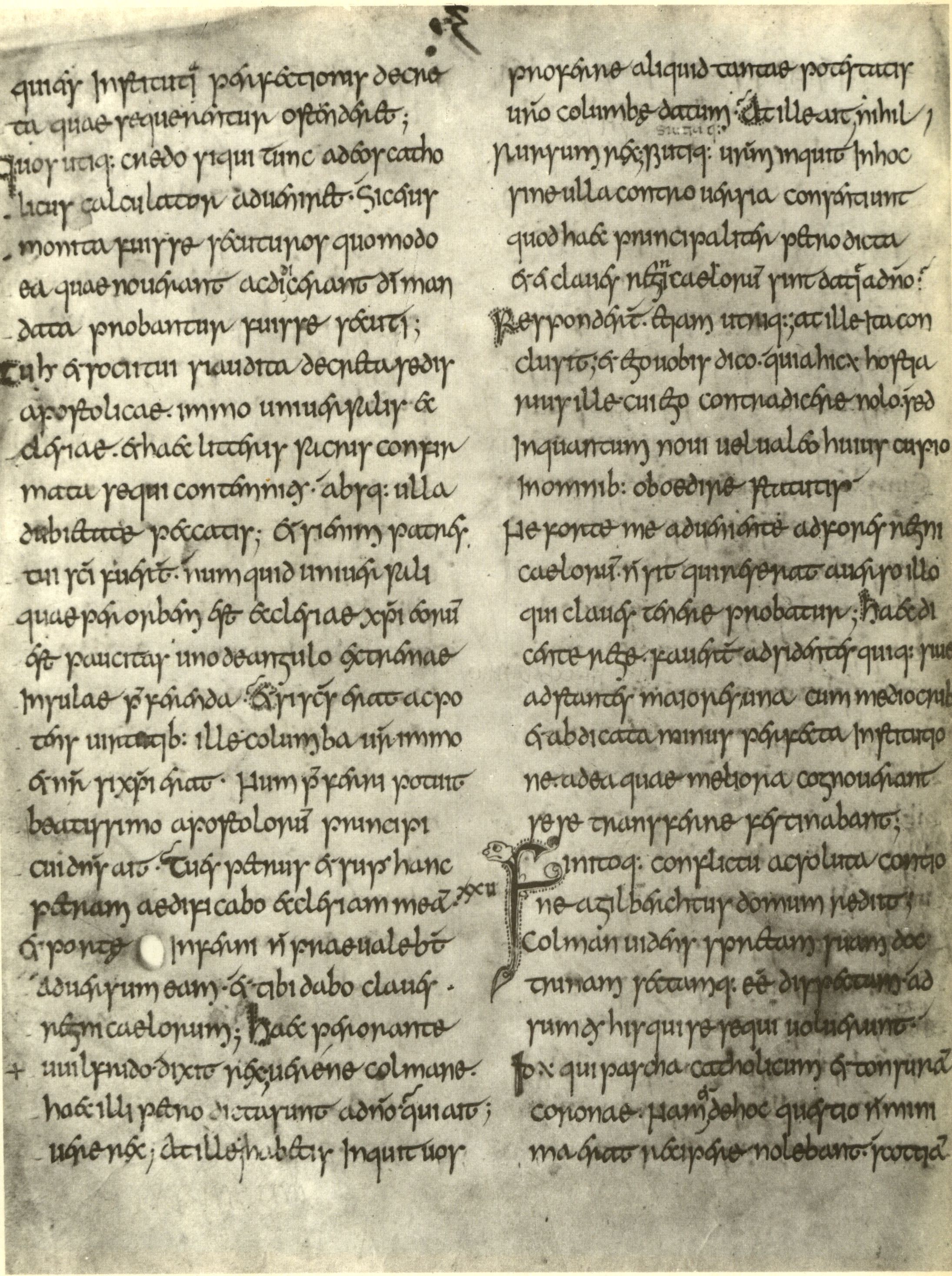
Ecclesiastical History III.19 - the account of Fursey
Event tradition 7th century; Bede writes early 8th century · Ireland, Anglo-Saxon England, the Frankish world
An Irish monk falls ill, is taken out of the body, is burned by something thrown at him - and carries the mark for life.
Monastic history
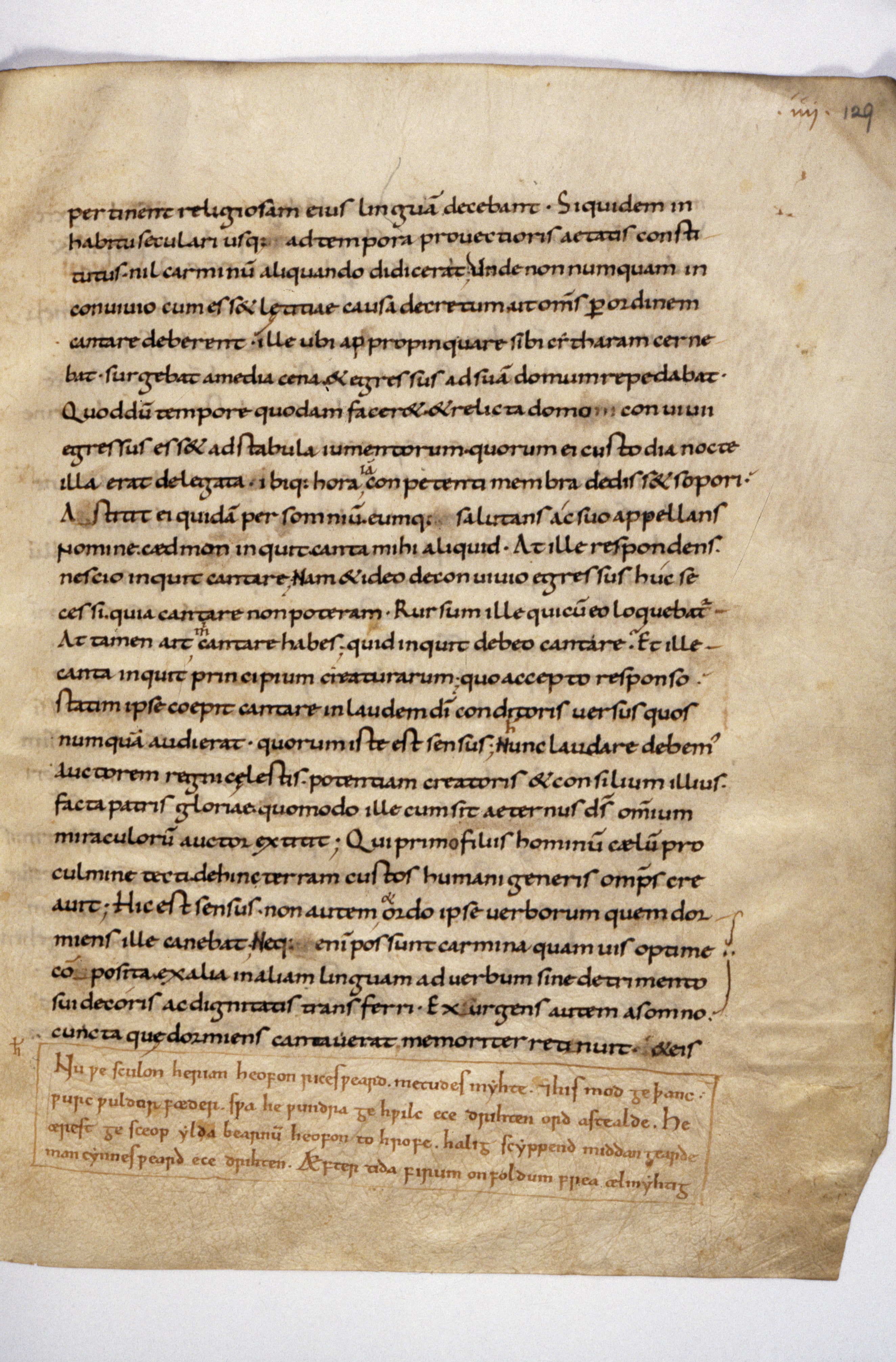
Ecclesiastical History V.12 - the account of Dryhthelm
7th–8th century tradition · Northumbria
A Northumbrian man is thought to have died, revives at dawn, and afterwards stands in a freezing river to pray.
Monastic history
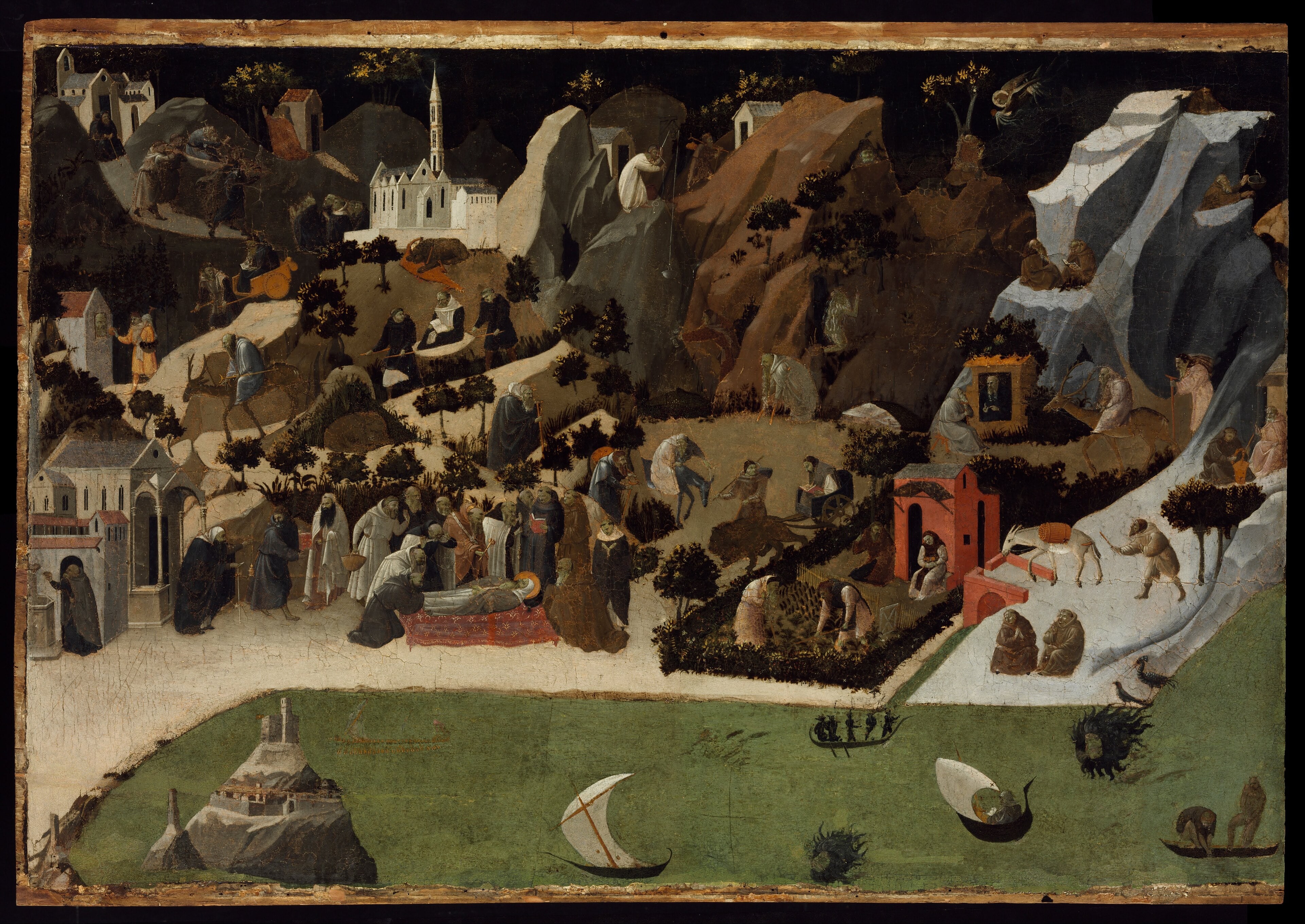
The Paradise, or Garden, of the Holy Fathers
Sayings of the 4th–5th centuries; this compilation 1907 · Egypt and the Syriac transmission
Hundreds of short sayings from the Egyptian desert, carried through Syriac, and flattened into one typeface by a 1907 editor.
Editorial compilation


