Latin Christianity
Ecclesiastical History V.12 - the account of Dryhthelm
7th–8th century tradition · Northumbria · Bede

MS Hatton 43, fol. 129r - Bede's Latin with a later marginal addition.
Source & rights
- What this is
- The source itself
- Object
- Manuscript
- Title
- Oxford, Bodleian Library, MS Hatton 43, fol. 129r
- Creator
- © Bodleian Libraries, University of Oxford
- Date
- 11th century
- Held by
- Bodleian Libraries
- Licence
- CC BY-SA 4.0
- This copy
- Hosted at the size published by the source; not altered.
- Retrieved
- 2026-08-28
A photograph of the text or object this record concerns.
Book IV, chapter 24, not the chapter quoted here. It is shown for the margin rather than the columns: a later hand has added an Old English text beneath the Latin. A text is not a fixed object that arrives intact; it is a surface other people wrote on.
A householder in Northumbria fell ill, was believed to have died, and at dawn sat up - to the terror of those watching over the body. He described being led through a landscape of punishment and light, and being told he must return.
What his neighbours could verify was not the journey. It was what he did afterwards: he gave away his property, entered a monastery, and took to standing in the river Tweed up to his neck while it carried broken ice past him. Asked how he could bear the cold, he said he had seen worse.
What the source is
An account of a man who is reported to have died, revived, described a guided journey through a sequence of places, and afterwards lived very differently.
The narrative's strongest claim is not about the journey. It is about the change in the man's subsequent conduct, which is the part with witnesses.
The report
Original
Haec mihi cum dixisset, multum detestatus sum reuerti ad corpus, delectatus nimirum suauitate ac decore loci illius, quem intuebar, simul et consortio eorum, quos in illo uidebam. Nec tamen aliquid ductorem meum rogare audebam; sed inter haec nescio quo ordine repente me inter homines uiuere cerno.Historical translation
When he had said this to me, I much abhorred returning to the body, being delighted with the sweetness and beauty of the place which I beheld, and with the company of those I saw in it. Nevertheless, I durst not ask my guide anything; but thereupon, on a sudden, I found myself, I know not how, alive among men.One phrase, closely
- Source
- nescio quo ordine
- Literal
- I do not know by what ordering, or in what sequence
- Rendered as
- Sellar 1907: “I know not how”
The whole reason this record exists is in three words. The narrative has just described a guided journey in considerable detail, and then, at the moment of return, the speaker states that he does not know by what means it happened. Sellar's “I know not how” is a perfectly reasonable rendering and it loses something: ordo is a word about sequence and arrangement, so the Latin declines to say not merely how the transition worked but in what order events occurred. A source that has been confident for several pages stops being confident exactly where a modern reader most wants it to continue - and the same refusal, in almost the same position, appears in the earliest report in this collection.
Why it is in this archive
Two claims of very different kinds sit inside one story. That a man appeared to die and revived is the sort of thing a community can observe. That he travelled somewhere while doing so is not.
The archive records the first as apparent death reported and the second as a guided journey claimed, and it keeps them in separate fields, because a text that presents them as a single event is not thereby entitled to have them assessed as one.
The behavioural change afterwards is worth its own line. It is the only element here that later observers could have checked, and it is also the element that would be least surprising under any explanation at all.
The words the source uses
Given in the language they were written in, with a plain rendering. None is treated as equivalent to a term from another tradition.
- visio
- vision
- nescio quo ordine
- I do not know by what ordering
- The source's own statement about the mode of its central event. Preserved here because it is the only part of the narrative that declines to be certain.
How close is the source?
Carried within a religious literary tradition, with the shaping that implies.
01 · Subject
Dryhthelm
02 · Written by
Bede, early 8th century
03 · Translated by
A. M. Sellar, 1907
04 · Digitised by
Project Gutenberg
Source gallery
Every image is labelled with what it is evidence for. Select one to see it whole.
Details, provenance and rights
- Experiencer state
- Illness · Apparent death reported
- Reported agency
- Single personal agency
- Locomotion claim
- Guided journey · Return
- Physical trace
- Behavioural change reported
- Witness or speaker
- Dryhthelm
- Recorder / translator
- Bede; English translation by A. M. Sellar, 1907
- Edition
- Latin: Historia ecclesiastica gentis Anglorum V.12. English: A. M. Sellar, 1907.
- Rights
- May be reproduced from a verified public-domain edition
- Cultural sensitivity
- Ordinary historical context
Provenance notes
- Recorded as apparent death reported. Nothing in this entry should be read as a medical statement about what occurred.
- The Latin transcription used here does not state which printed edition it follows. For a claim resting on a single word, that gap would have to be closed against a named critical edition before the reading could be leaned on.
- The 1907 English is a historical translation and carries the theological and stylistic choices of its period. It is printed as a translation, not as the text.
The Latin is ancient and the 1907 translation is out of copyright. Both are quoted, not mirrored: this project holds no copy of either book.
From the same shelf
Grouped by the tradition that produced them. Nothing here claims they share a cause.
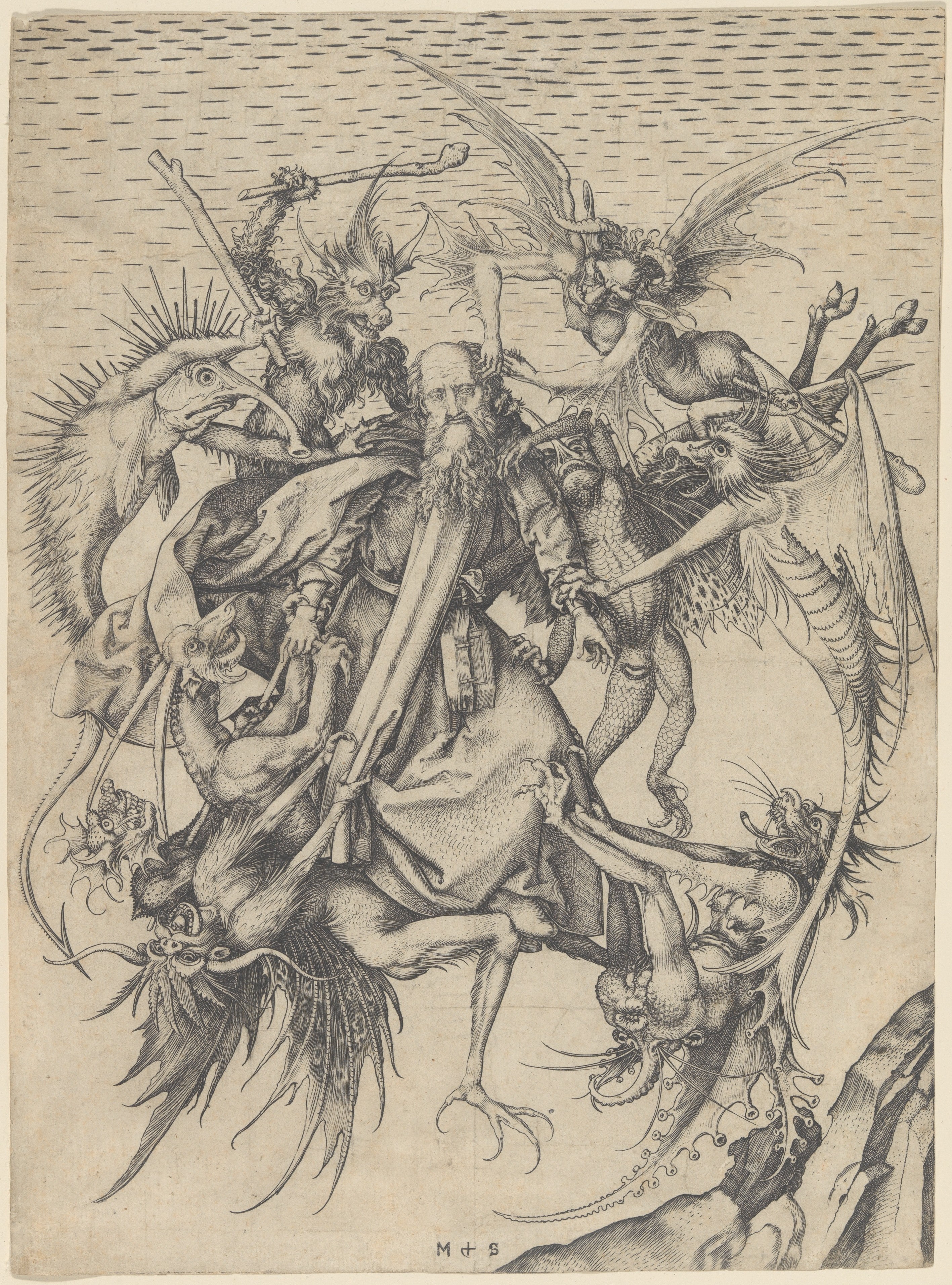
Life of Antony
4th century · Egypt
An Egyptian ascetic is besieged by things that change shape, make predictions, and lie - and is taught how to test them.
Hagiography
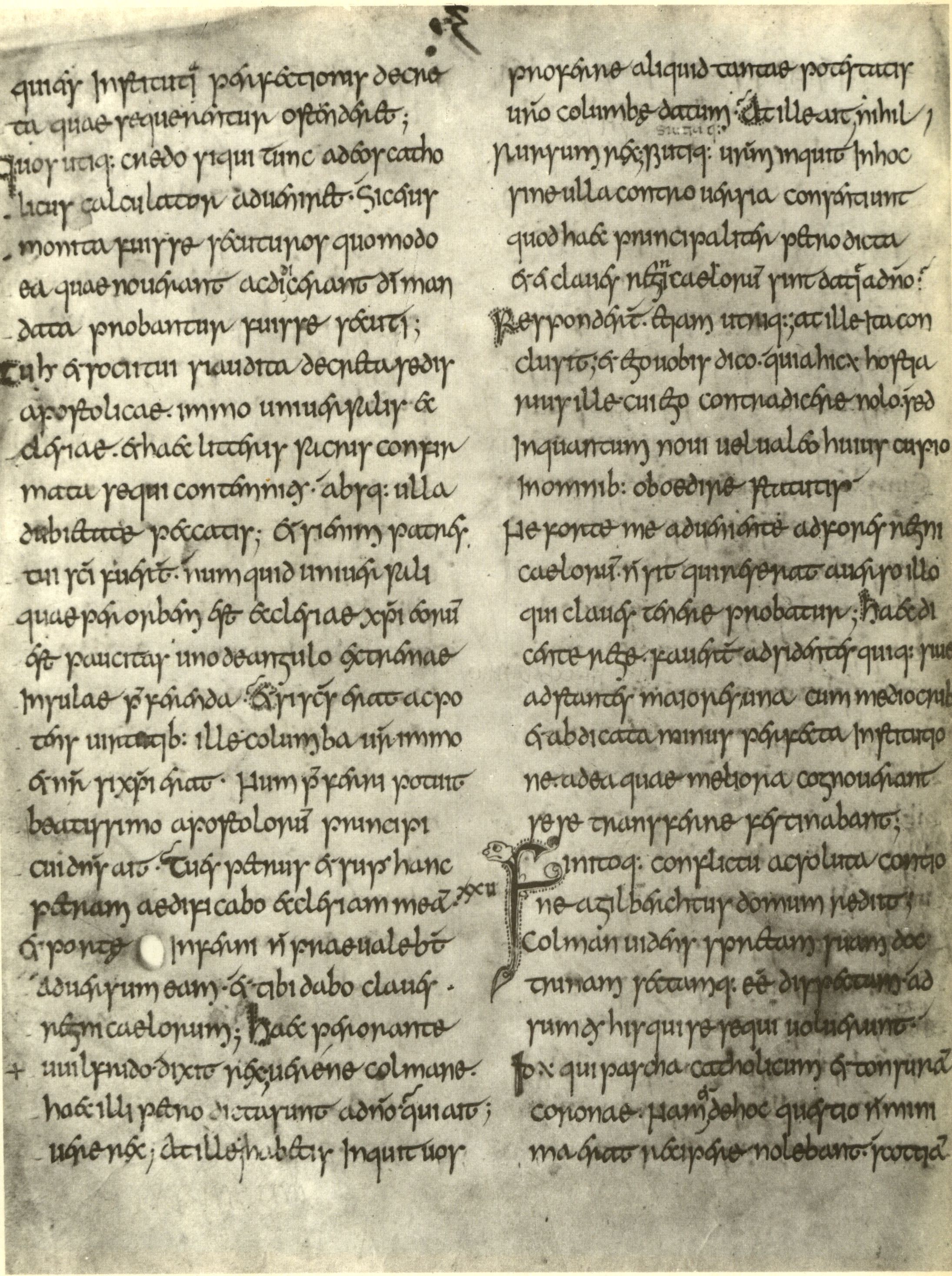
Ecclesiastical History III.19 - the account of Fursey
Event tradition 7th century; Bede writes early 8th century · Ireland, Anglo-Saxon England, the Frankish world
An Irish monk falls ill, is taken out of the body, is burned by something thrown at him - and carries the mark for life.
Monastic history
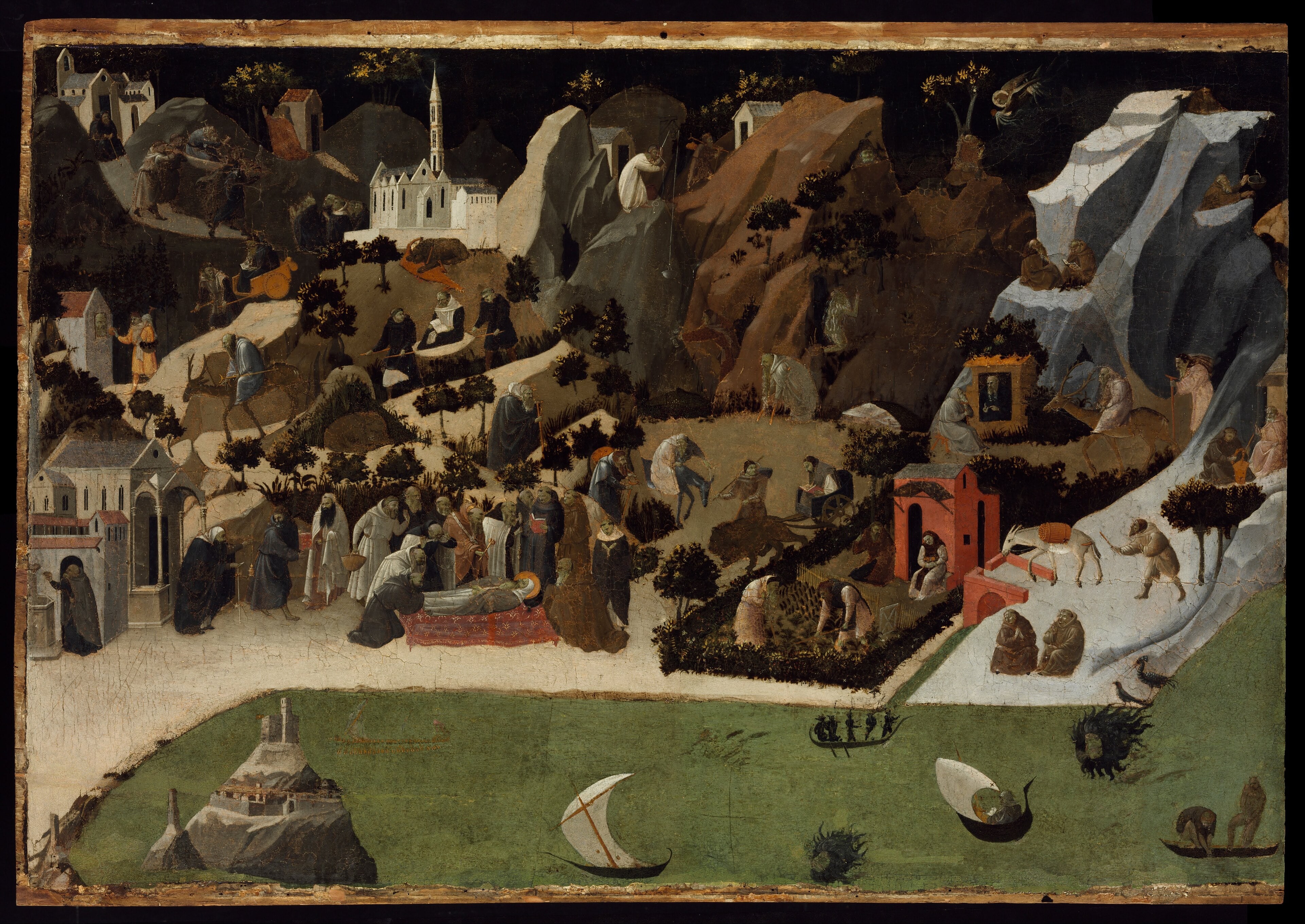
The Paradise, or Garden, of the Holy Fathers
Sayings of the 4th–5th centuries; this compilation 1907 · Egypt and the Syriac transmission
Hundreds of short sayings from the Egyptian desert, carried through Syriac, and flattened into one typeface by a 1907 editor.
Editorial compilation


