Insular and Latin Christianity
Ecclesiastical History III.19 - the account of Fursey
Event tradition 7th century; Bede writes early 8th century · Ireland, Anglo-Saxon England, the Frankish world · Bede

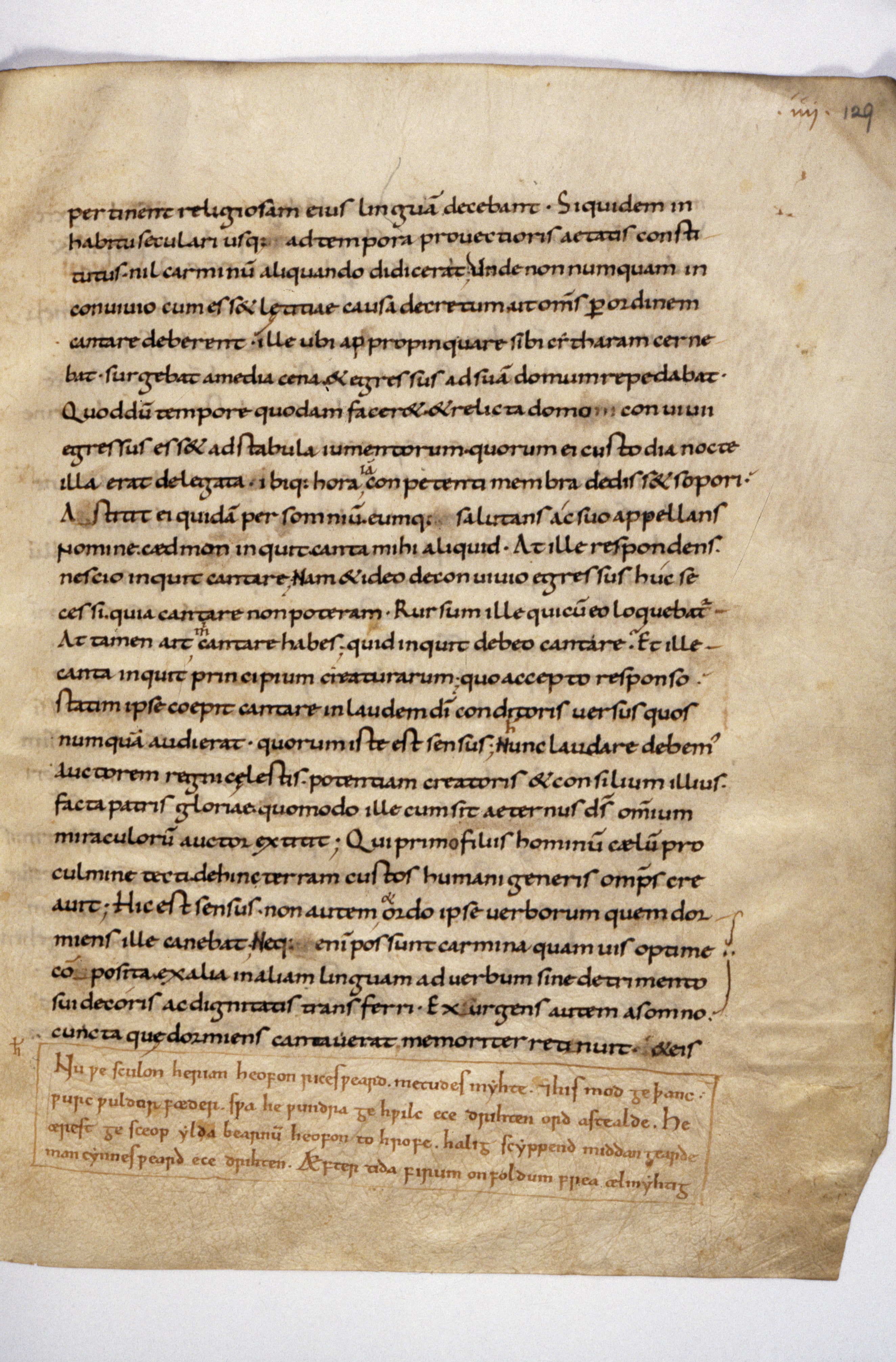
A folio of Bede's Ecclesiastical History, Cotton Tiberius C II, 8th century.
Source & rights
- What this is
- The source itself
- Object
- Manuscript
- Title
- Bede, Ecclesiastical History, Cotton Tiberius C II, fol. 87v
- Date
- 8th century
- Held by
- British Library
- Licence
- Public domain
- This copy
- Hosted at the size published by the source; not altered.
- Retrieved
- 2026-08-29
A photograph of the text or object this record concerns.
A manuscript of the work quoted on this page, not of this chapter. It is shown for what the text physically is: ink on prepared skin, copied by hand, and surviving by accident of storage.
Fursey came from Ireland to East Anglia in the seventh century and, during an illness, was said to have been taken out of his body and shown a sequence of scenes: fires, accusations, guides, a return. On the way back something burning was flung at him and caught his shoulder and jaw.
The narrative's last claim is the one that can be checked. For the rest of his life, Bede says, he bore the mark, visible to everyone. That is the only part of the account that other people could have looked at - and Bede, unusually, also tells us exactly how far he is from the man who saw it.
What the source is
Bede's account of an Irish monk who, during illness, is described as being taken out of the body, shown a sequence of scenes, and returned - with the narrative attaching a lasting bodily consequence to the experience.
Bede is explicit that he is drawing on an earlier written account rather than on testimony, which makes the chain unusually visible for a text of its period.
The report
Original
Qui postmodum in corpore restitutus, omni uitae suae tempore signum incendii, quod in anima pertulit, uisibile cunctis in humero maxillaque portauit; mirumque in modum, quid anima in occulto passa sit, caro palam praemonstrabat.Historical translation
Being afterwards restored to the body, throughout the whole course of his life he bore the mark of the fire which he had felt in the spirit, visible to all men on his shoulder and jaw; and the flesh openly showed, in a wonderful manner, what the spirit had suffered in secret.One phrase, closely
- Source
- quid anima in occulto passa sit, caro palam praemonstrabat
- Literal
- what the soul suffered in secret, the flesh displayed openly
- Rendered as
- Sellar 1907: “the flesh openly showed … what the spirit had suffered in secret”
Of everything in this long narrative, this is the only claim that anybody but the visionary could have examined: a mark on the shoulder and jaw of a living man, said to have been visible to all for the rest of his life. It is therefore the sentence the archive is interested in, and it is filed as a bodily aftereffect reported - reported, because a claim that a mark was visible to all is still a claim, and the people it was visible to are not available to us. Note also Sellar's anima as “spirit”: the Latin sets soul against flesh, and the English quietly introduces a third term the sentence does not have.
Why it is in this archive
The vocabulary of this account is entirely theological and entirely clear, and that clarity is exactly the problem. It is easy to read the words and believe you have read the claim.
The useful exercise is to separate three things the text presents as one: the terminology the tradition supplied, the literary shaping a monastic historian applied, and whatever sensory or bodily event is actually being asserted. The third is the smallest of the three and the hardest to isolate.
This archive does not classify the account as a medieval near-death experience. That label imports a twentieth-century category into an eighth-century text and settles by naming what ought to be examined.
The words the source uses
Given in the language they were written in, with a plain rendering. None is treated as equivalent to a term from another tradition.
- angelus
- angel
- visio
- vision
How close is the source?
Carried within a religious literary tradition, with the shaping that implies.
01 · Subject
Fursey
02 · Earlier account
A written life Bede says he is following
Bede names his dependence. The intermediate text is a link in the chain we cannot inspect here.
03 · Told to
A man Bede describes as truthful and religious
Who had, on his own account, seen Fursey and heard the visions from him.
04 · Told to
An aged brother of Bede's monastery, still living when Bede wrote
05 · Written by
Bede, early 8th century
Bede sets out this chain himself. He is the fourth hand and does not pretend otherwise.
06 · Translated by
A. M. Sellar, 1907
07 · Digitised by
Project Gutenberg
Source gallery
Every image is labelled with what it is evidence for. Select one to see it whole.
Details, provenance and rights
- Experiencer state
- Illness
- Reported agency
- Multiple personal agencies
- Locomotion claim
- Guided journey · Ascent · Return
- Physical trace
- Bodily aftereffect reported
- Witness or speaker
- Fursey, at several removes
- Recorder / translator
- Bede, drawing on an earlier written account; English translation by A. M. Sellar, 1907
- Edition
- Latin: Historia ecclesiastica gentis Anglorum III.19. English: A. M. Sellar, 1907.
- Rights
- May be reproduced from a verified public-domain edition
- Cultural sensitivity
- Ordinary historical context
Provenance notes
- Bede is writing about an event tradition roughly a century older than his own text.
- Bede states his own chain for this story, and it is four links long: an aged brother of his monastery, who used to relate that a truthful man told him that he had seen Fursey and heard the visions from him. Bede is the fourth hand, and he says so.
- The Sellar translation is a period rendering and makes period choices about theological vocabulary.
- The Latin transcription used here does not state which printed edition it follows.
The Latin is ancient and the 1907 English translation is out of copyright. Both are quoted, not mirrored: this project holds no copy of either book.
From the same shelf
Grouped by the tradition that produced them. Nothing here claims they share a cause.
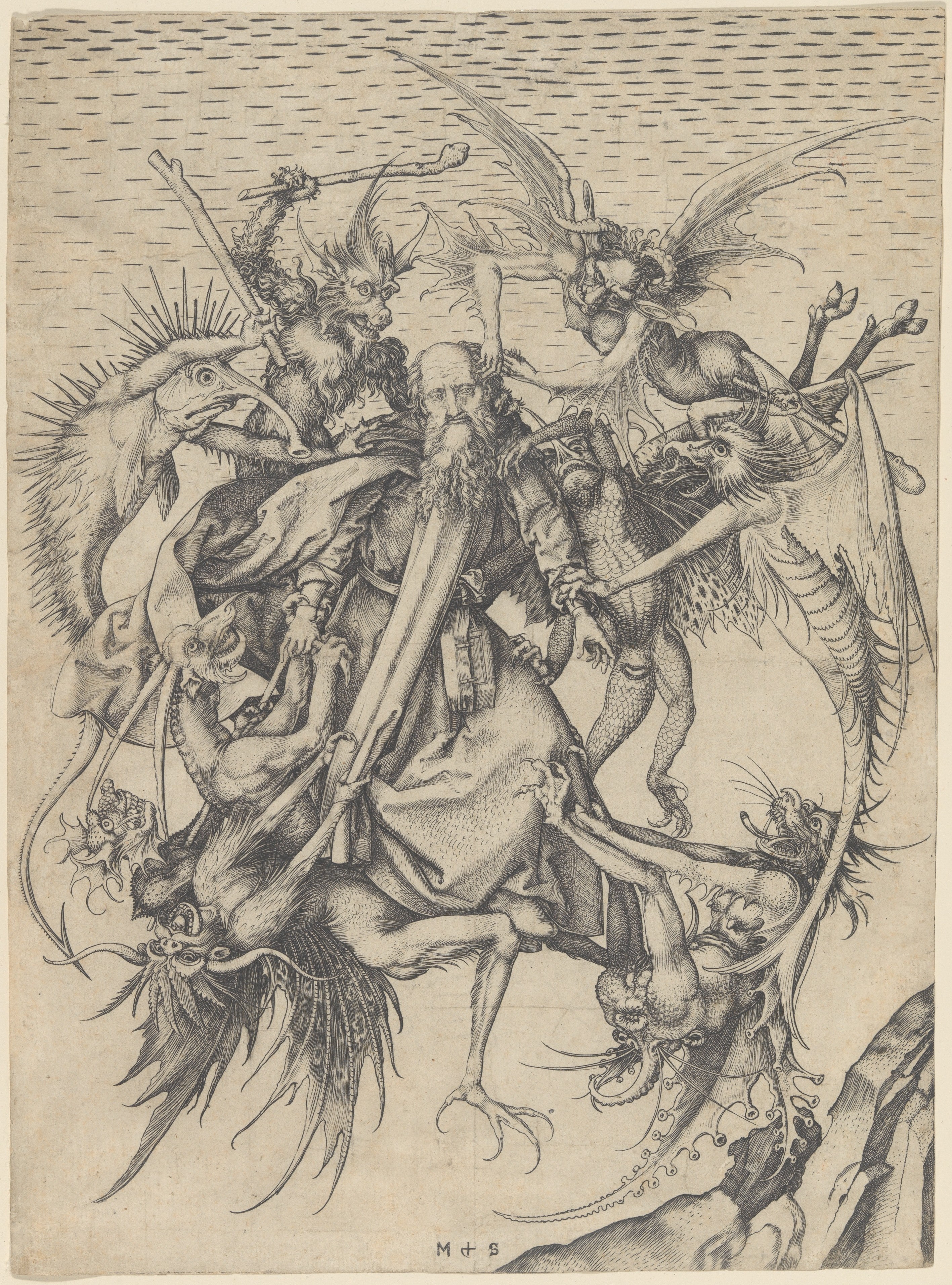
Life of Antony
4th century · Egypt
An Egyptian ascetic is besieged by things that change shape, make predictions, and lie - and is taught how to test them.
Hagiography
Ecclesiastical History V.12 - the account of Dryhthelm
7th–8th century tradition · Northumbria
A Northumbrian man is thought to have died, revives at dawn, and afterwards stands in a freezing river to pray.
Monastic history
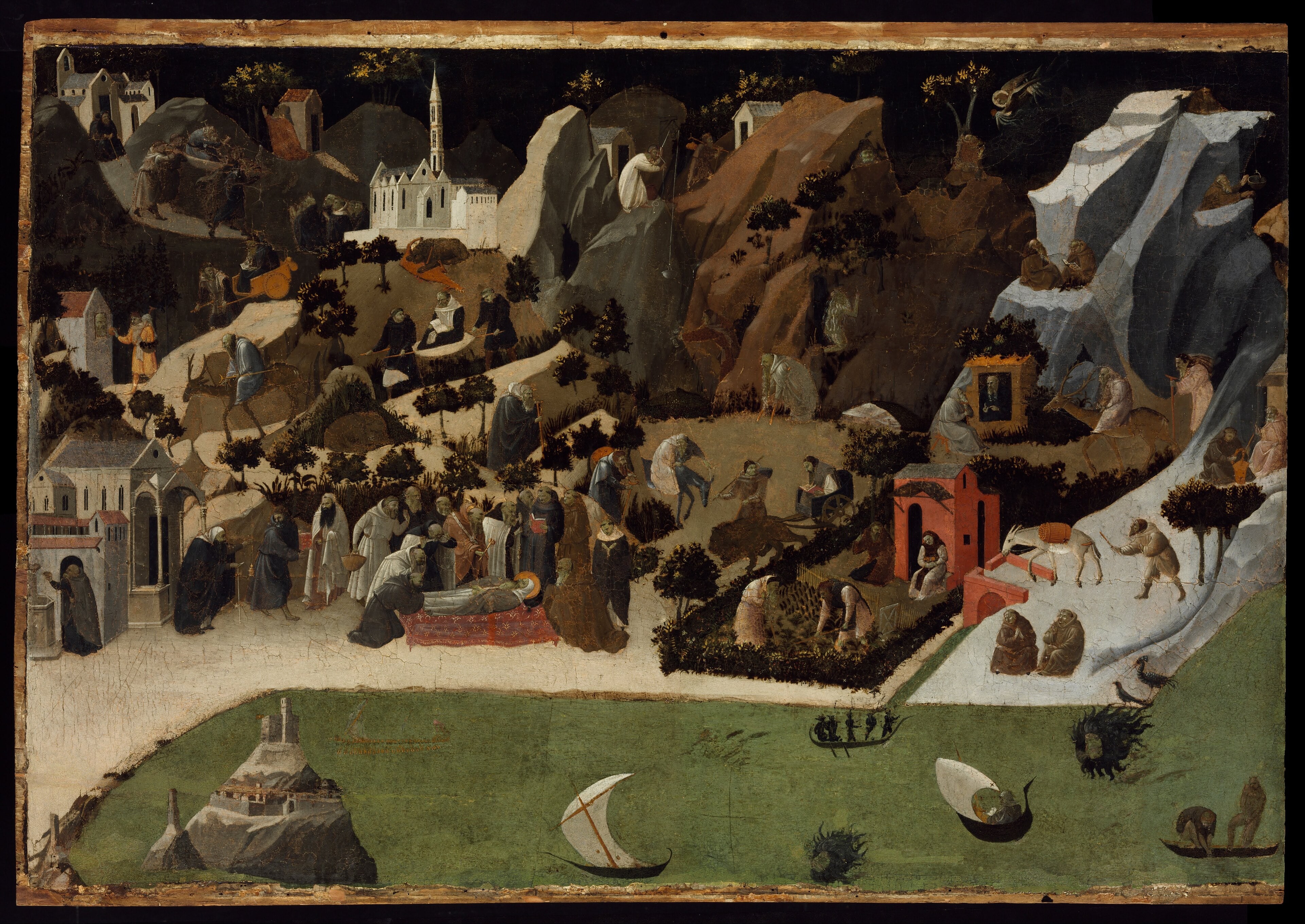
The Paradise, or Garden, of the Holy Fathers
Sayings of the 4th–5th centuries; this compilation 1907 · Egypt and the Syriac transmission
Hundreds of short sayings from the Egyptian desert, carried through Syriac, and flattened into one typeface by a 1907 editor.
Editorial compilation


