Persian Sufi Islam
Tadhkirat al-Awliyā
Medieval; Persian critical edition 1905–1907 · Persia and the Iranian cultural sphere · Farid al-Din Attar

Mantiq al-tair, 1487 - a different work by the same author.
Source & rights
- What this is
- Material context
- Object
- Manuscript
- Title
- “Funeral Procession”, folio 35r from a Mantiq al-tair (Language of the Birds)
- Creator
- Calligrapher Sultan Ali Mashhadi; text by Farid al-Din Attar
- Date
- Dated A.H. 892 / A.D. 1487
- Held by
- The Metropolitan Museum of Art
- Licence
- CC0
- This copy
- Hosted at the size published by the source; not altered.
- Retrieved
- 2026-08-28
An object of the same period and kind. Not a witness to this text and not a depiction of its events.
Not the text catalogued here and not an illustration of it. It shows what a Persian manuscript of this tradition physically was: script, illumination and painting produced together as one object, by named hands, three centuries after the author.
Attar's compilation gathers accounts of earlier Sufi figures: their sayings, their disciplines, their dreams, and the ecstatic utterances that sometimes got them killed. It was assembled centuries after most of the people in it, from material that had already been circulating for generations.
This entry carries no English passage. Modern translations are under copyright, the Persian is public domain, and a rendering of sacred biographical material made in a hurry and checked by nobody is the one thing this archive cannot afford to publish.
What the source is
A medieval Persian compilation of accounts of earlier Sufi figures: their sayings, disciplines, ecstatic speech, dreams and encounters.
This entry is a bibliographic and source card. No English rendering of any passage is published here.
The report
No passage reproduced - Project translation in preparation
PROJECT TRANSLATION IN PREPARATION. The Persian text is public domain; modern English translations are not. A short passage would need to be translated afresh and reviewed by someone competent in Persian and in the tradition's vocabulary. No reviewer has been engaged, and none is named here, because none exists.
Why it is in this archive
The archive would be poorer, and would be making a claim by omission, if the only ascetic traditions in it were Christian ones.
It is included now, without any text, because the alternative was to include it later or to include it badly. Publishing an unreviewed English rendering of sacred biographical material in order to fill a card would be exactly the failure this collection exists to argue against.
It should also be said plainly that Sufi categories are not Christian monastic categories with different names. Both traditions involve asceticism; that is not a reason to read one through the other, and this archive does not.
The words the source uses
Given in the language they were written in, with a plain rendering. None is treated as equivalent to a term from another tradition.
- awliyā
- friends of God
- Often rendered 'saints' in English. The rendering carries Christian associations the Persian does not, which is a good illustration of why this archive keeps the source term.
How close is the source?
Substantial chronological or textual distance from any event.
01 · Compiled by
Farid al-Din Attar
02 · About
Earlier figures, at unstated distance
A hagiographical compilation reports what had already been transmitted, often for centuries.
03 · Persian edition by
R. A. Nicholson, 1905–1907
The public-domain edition of the Persian text, not an English translation.
Details, provenance and rights
- Experiencer state
- Ascetic practice · Trance · Unknown
- Reported agency
- Single personal agency · Unidentified agency · No agency claimed
- Locomotion claim
- None
- Physical trace
- None reported
- Witness or speaker
- Many figures, at distances the compilation does not always state
- Recorder / translator
- Compiled by Attar; Persian edition by R. A. Nicholson, 1905–1907
- Edition
- R. A. Nicholson, ed., Tadhkirat al-Awliyā, 1905–1907
- Rights
- Requires a fresh, reviewed translation
- Cultural sensitivity
- Context needed
Provenance notes
- Nothing on this page is translated from the Persian. The card exists so that the gap is visible rather than silently filled.
The 1905–1907 Persian edition is public domain. No modern English translation is reproduced or paraphrased.
From the same shelf
Grouped by the tradition that produced them. Nothing here claims they share a cause.
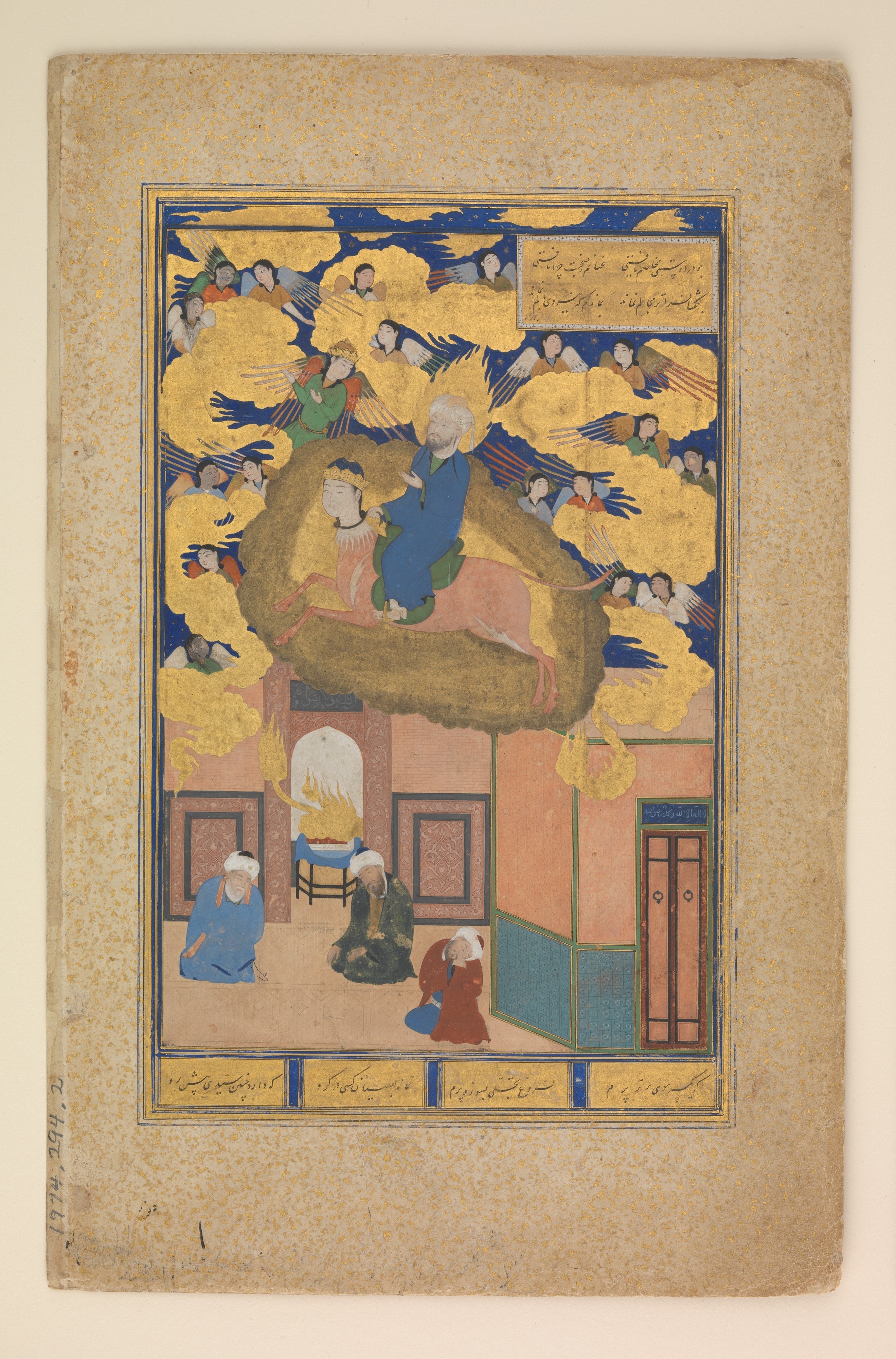
The Miʿrāj - the night journey and ascent
7th-century tradition; this manuscript 16th century · Arabia; the Islamic world
A journey by night and an ascent through the heavens, recounted in a tradition that argued for centuries about whether the body went.
Scripture
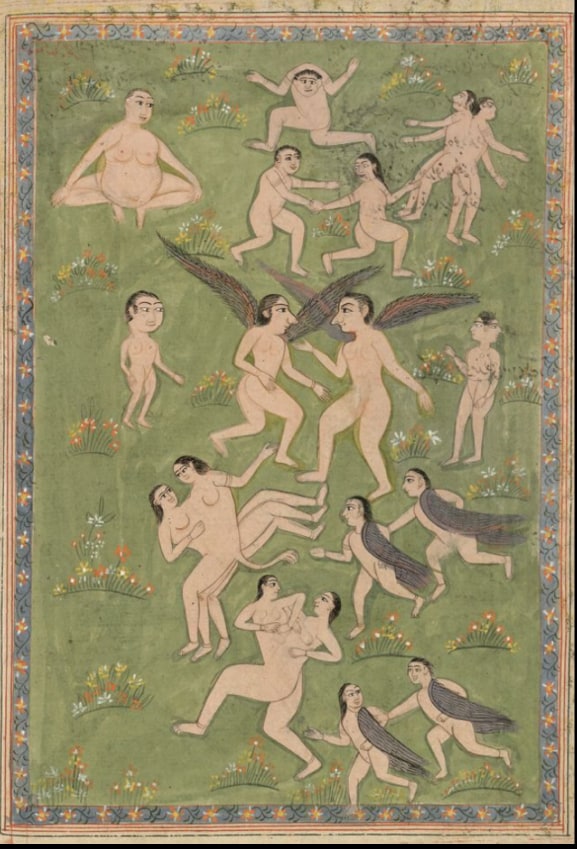
Jinn in the cosmographical manuscripts
13th-century tradition; this manuscript c. 1601–1800 · The Islamic world; this manuscript from the Persian sphere
Illustrated catalogues of the world's contents, in which jinn are listed between the animals and the stars, in the same register.
Editorial compilation

