Islam
The Miʿrāj - the night journey and ascent
7th-century tradition; this manuscript 16th century · Arabia; the Islamic world

The Night Flight, folio from a Bustan of Saʿdi, 16th century.
Depictions of the Prophet Muhammad are religiously sensitive for many Muslims, and practice differs sharply between traditions and periods. This folio is a historical Persian manuscript painting from a tradition in which such images were made. It is reproduced here at ordinary scale, in sequence with the other manuscript images, and is not used as a thumbnail or a headline image.
Source & rights
- What this is
- Depiction from within the tradition
- Object
- Manuscript
- Title
- The Miʿraj, or the Night Flight of Muhammad on his Steed Buraq - folio 3v from a Bustan of Saʿdi
- Date
- 16th century
- Held by
- The Metropolitan Museum of Art
- Licence
- CC0
- This copy
- Hosted at the size published by the source; not altered.
- Retrieved
- 2026-08-29
Made within the tradition that transmitted the account, though not by a witness to it.
A journey by night from Mecca to Jerusalem, and from there an ascent through the heavens: the account is central to Islamic tradition, elaborated across centuries of commentary, poetry and painting, and it is one of the most widely depicted narratives in this archive.
It is also a tradition that has argued at length about precisely the question the earliest report in this collection leaves open. Whether the journey was bodily, or in vision, or in sleep, was debated by scholars from an early period and never settled by consensus. The dispute is part of the record rather than a modern imposition on it.
What the source is
A narrative established in the Qur'an and greatly elaborated in hadith and later literature, concerning a journey by night and an ascent through the heavens.
This entry is a source and image card. No scriptural passage is reproduced.
The report
No passage reproduced - Project translation in preparation
No passage is printed. Reproducing scripture from a period translation would import that translator's theology into a text this archive has no standing to interpret, and a fresh translation would need review by someone qualified in ways nobody working on this is.
Why it is in this archive
Because a tradition that holds this account as true also produced a long internal argument about its mode - bodily, or in vision, or in sleep - and never resolved it by fiat.
That is the same question the collection's earliest entry raises about a first-century ascent, arrived at independently and worked on for very much longer. Two traditions, no contact between the discussions, and the same difficulty identified as the difficulty: not what was seen, but what kind of thing the seeing was.
This archive records that the mode is contested within the tradition. It does not adjudicate the contest, which is not its business and would require standing it does not have.
The words the source uses
Given in the language they were written in, with a plain rendering. None is treated as equivalent to a term from another tradition.
- isrāʾ
- the night journey
- miʿrāj
- the ascent; literally a ladder or means of going up
How close is the source?
Carried within a religious literary tradition, with the shaping that implies.
01 · Subject
Muhammad
02 · Established in
The Qur'an, briefly, and in hadith at much greater length
03 · Elaborated by
Centuries of commentary, poetry and painting
The visual tradition, including the manuscript shown here, belongs to this later layer.
Details, provenance and rights
- Experiencer state
- Sleep transition · Awake · Unknown
- Reported agency
- Single personal agency · Multiple personal agencies
- Locomotion claim
- Transport · Ascent · Return
- Physical trace
- None reported
- Witness or speaker
- Muhammad, in the tradition's account
- Recorder / translator
- Transmitted through Qur'anic text, hadith collections and later commentary
- Edition
- Folio 3v from a Bustan of Saʿdi; The Metropolitan Museum of Art
- Rights
- Link only - not reproduced here
- Cultural sensitivity
- Context needed
Provenance notes
- The manuscript reproduced here is a sixteenth-century Persian literary manuscript, not a scriptural one, and postdates the events it depicts by some nine centuries.
- This entry describes the existence and shape of a tradition. It makes no claim about the events and offers no reading of the scripture.
The manuscript image is CC0 from the holding museum. No scriptural text is reproduced.
From the same shelf
Grouped by the tradition that produced them. Nothing here claims they share a cause.
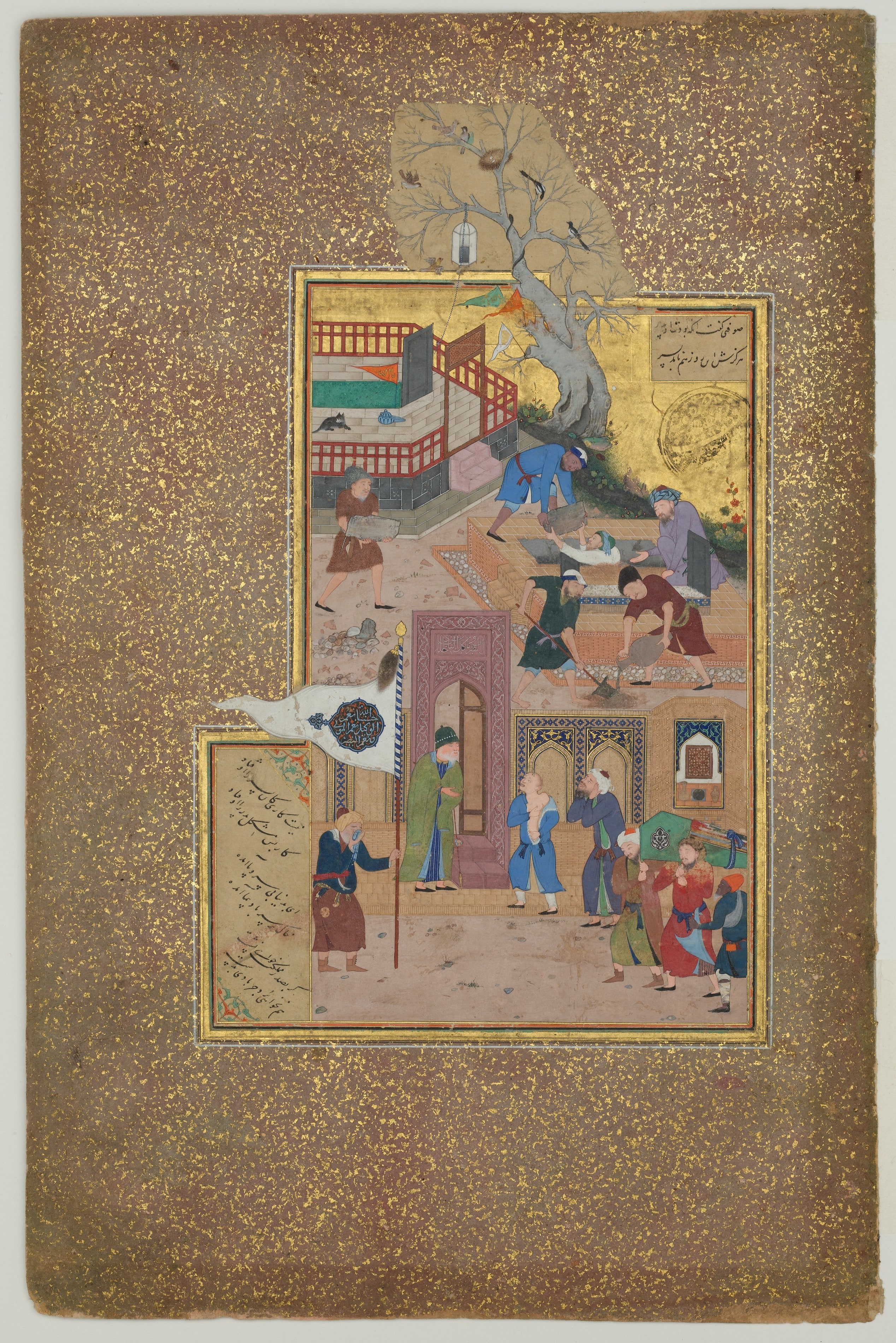
Tadhkirat al-Awliyā
Medieval; Persian critical edition 1905–1907 · Persia and the Iranian cultural sphere
Persian lives of the friends of God - ecstatic speech, dreams, disciplines - held here without an English text.
Hagiography
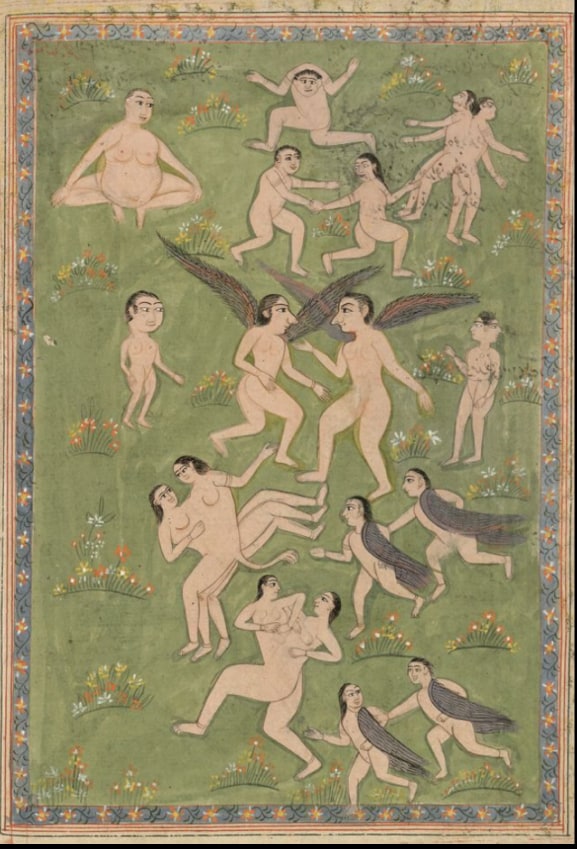
Jinn in the cosmographical manuscripts
13th-century tradition; this manuscript c. 1601–1800 · The Islamic world; this manuscript from the Persian sphere
Illustrated catalogues of the world's contents, in which jinn are listed between the animals and the stars, in the same register.
Editorial compilation

