Medieval Latin Christianity
Visio Tnugdali - the vision of Tundale
Event dated 1148; text written c. 1149 · Ireland; Latin Europe · Written by Brother Marcus

Simon Marmion, illumination from the Visio Tnugdali, c. 1475.
Source & rights
- What this is
- Depiction from within the tradition
- Object
- Manuscript
- Title
- The Beast Acheron
- Creator
- Simon Marmion
- Date
- c. 1475
- Held by
- The J. Paul Getty Museum
- Licence
- Public domain
- This copy
- Hosted at the size published by the source; not altered.
- Retrieved
- 2026-08-29
Made within the tradition that transmitted the account, though not by a witness to it.
Painted three centuries after the text it illustrates, for a Burgundian court manuscript. By this date the narrative had an agreed geography and an agreed cast, and a reader encountering the story here would have met the pictures before the questions.
In 1148, according to the account, a knight of Cashel collapsed while dining, was thought dead for three days and nights, and then revived. What he described was not a glimpse but an itinerary: a guide, a sequence of named places, specific punishments matched to specific sins, a bridge, a beast, a wall, and finally light.
It was written down within a year or two by an Irish monk living in Regensburg, in Latin, and it travelled. Within three hundred years it existed in more than a dozen languages, in illuminated court manuscripts and in cheap printed editions with woodcuts, and any reader meeting it had almost certainly seen the pictures first.
What the source is
A Latin narrative composed at Regensburg shortly after the events it describes, recounting a three-day apparent death and a guided journey through a structured otherworld.
It became one of the most widely copied texts of the European middle ages, and the version most readers encountered was already illustrated.
The report
No passage reproduced - Excerpt not published - edition and page not yet verified
A public-domain Latin edition exists - Oscar Schade, 1869 - and could be quoted. This project has not yet checked a passage against it, and prints nothing it has not opened.
Why it is in this archive
This is the archive's clearest case of a report acquiring a map. The narrative does not merely describe strange things; it describes them in order, in named places, with a topography that later texts and later pictures reproduce.
Once a report has a geography, it becomes very hard to ask which parts were reported and which were inherited. A witness who has read one of these accounts - and after 1150, most literate witnesses in Latin Europe had - is not describing an unfurnished experience.
The text is also unusually honest about its own construction. Marcus says he is writing what he was told, in Latin, for a particular audience, at a particular abbey. He is a named intermediary who does not pretend to be transparent.
The words the source uses
Given in the language they were written in, with a plain rendering. None is treated as equivalent to a term from another tradition.
- visio
- vision
- The word in the title, and a genre label as much as a description. By the twelfth century a visio was a recognised kind of text with expectations attached.
How close is the source?
Recorded by someone close to the witness or the event, but not dictation.
01 · Subject
Tnugdalus, a knight of Cashel
02 · Written by
Brother Marcus, at Regensburg, c. 1149
An Irish monk abroad, writing in Latin for a continental readership about an Irish layman.
03 · Copied into
More than 150 surviving Latin manuscripts, and translations into at least fifteen languages
04 · Illustrated in
Court manuscripts and printed editions from the 15th century
By which point the pictures were doing much of the work.
Source gallery
Every image is labelled with what it is evidence for. Select one to see it whole.
Project Nikolaos annotation
Written by this project. Not part of the source, and not a translation of anything in it.
Once a report has a map, it becomes easy to forget to ask which parts were observed and which were inherited.
Details, provenance and rights
- Experiencer state
- Apparent death reported · Illness
- Reported agency
- Single personal agency · Multiple personal agencies
- Locomotion claim
- Guided journey · Descent · Ascent · Return
- Physical trace
- Behavioural change reported
- Witness or speaker
- Tnugdalus, a knight of Cashel
- Recorder / translator
- Brother Marcus, an Irish monk at Regensburg, writing in Latin
- Edition
- Oscar Schade, ed., Visio Tnugdali, 1869 (public-domain Latin edition)
- Rights
- May be reproduced from a verified public-domain edition
- Cultural sensitivity
- Ordinary historical context
Provenance notes
- The date of 1148 is the text's own. It has not been corroborated by this project against any other source.
- Naming the knight does not establish that a knight of that name collapsed in that year.
The Latin text and the 1869 edition are both out of copyright. Neither is mirrored here.
From the same shelf
Grouped by the tradition that produced them. Nothing here claims they share a cause.
Life of Antony
4th century · Egypt
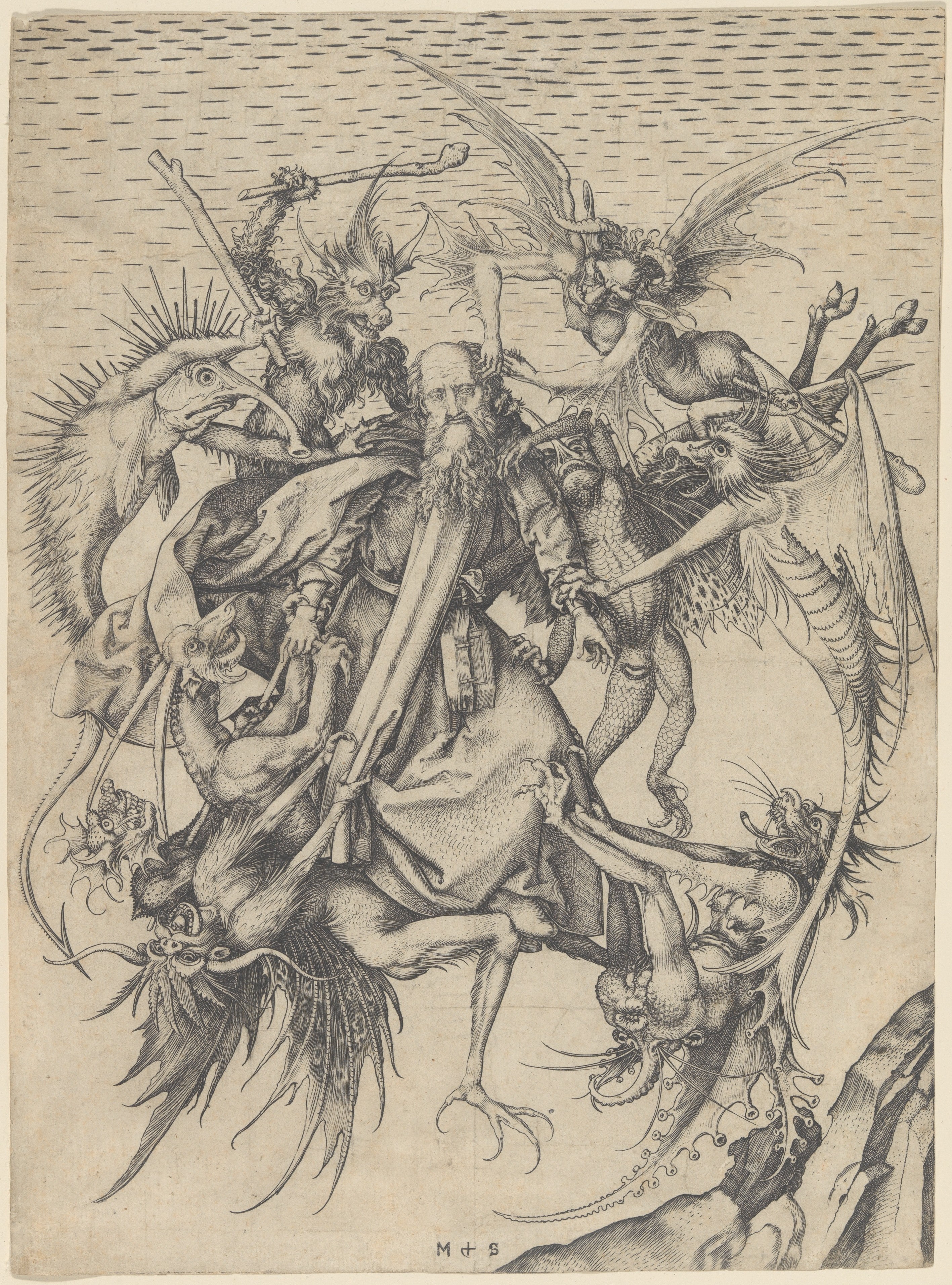
An Egyptian ascetic is besieged by things that change shape, make predictions, and lie - and is taught how to test them.
Hagiography
Ecclesiastical History III.19 - the account of Fursey
Event tradition 7th century; Bede writes early 8th century · Ireland, Anglo-Saxon England, the Frankish world
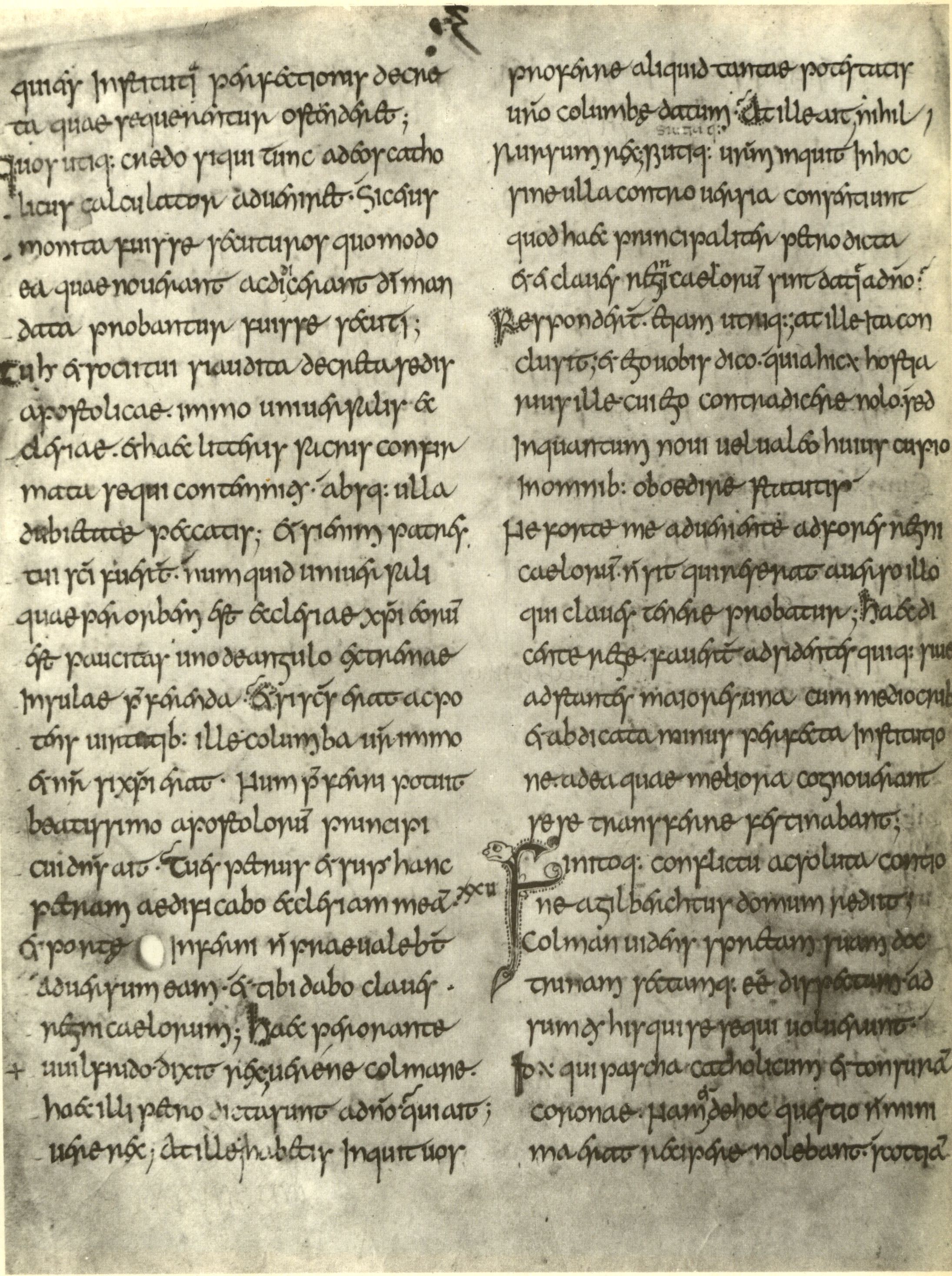
An Irish monk falls ill, is taken out of the body, is burned by something thrown at him - and carries the mark for life.
Monastic history
Ecclesiastical History V.12 - the account of Dryhthelm
7th–8th century tradition · Northumbria
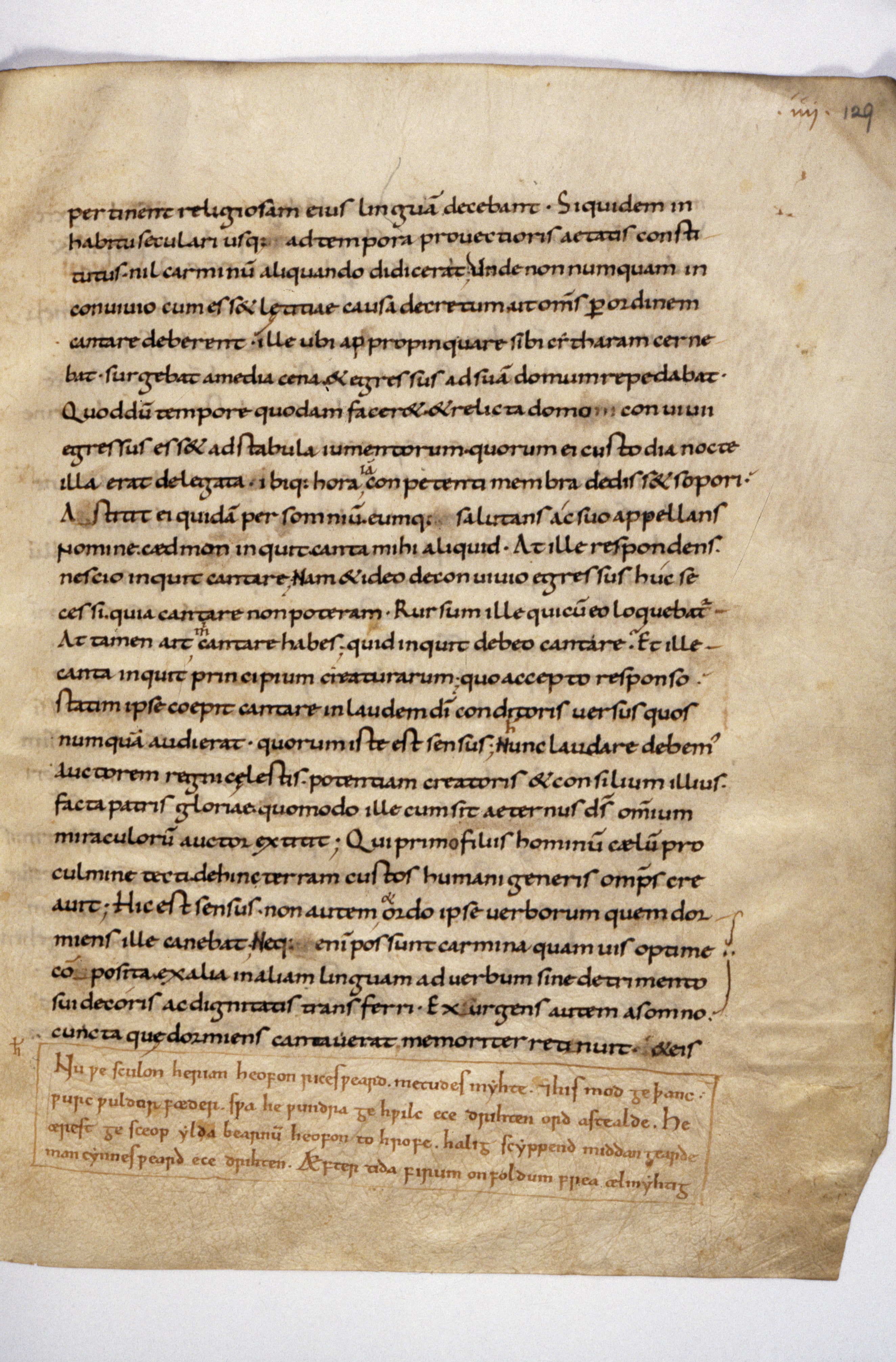
A Northumbrian man is thought to have died, revives at dawn, and afterwards stands in a freezing river to pray.
Monastic history


