Roman literary, historical and religious tradition
The signs at Caesar's death
15 March – late 44 BCE · Rome and the Mediterranean · Virgil, Ovid, Pliny, Suetonius and others

Antonio Tempesta, plate 150 from a series illustrating Ovid's Metamorphoses, 1606.
Source & rights
- What this is
- Later depiction
- Object
- Title
- The Murder of Julius Caesar (Iulius Caesar Veneris beneficio in Cometam mutatur)
- Creator
- Antonio Tempesta
- Date
- 1606
- Held by
- The Metropolitan Museum of Art
- Licence
- CC0
- This copy
- Hosted at the size published by the source; not altered.
- Retrieved
- 2026-08-29
Made long afterwards. Evidence about the period that produced it, and about nothing else.
Sixteen hundred years after the event and made to illustrate a poem, not a history. Its interest is that it puts the murder and the comet in one frame - which is what Ovid does, and what the sources closer to 44 BCE do not.
On 15 March 44 BCE Julius Caesar was killed in a meeting of the Roman senate. Within a generation, and increasingly for centuries afterwards, the killing was remembered as something the natural world had announced in advance and mourned afterwards: sacrifices that would not come right, a wife's dream, a warning handed over in the street, a Sun that would not shine properly, and reports of more than one sun in the sky.
Then, in July, at games held in Caesar's honour, a comet appeared. It was bright, it was visible for days, and it was read almost at once as Caesar's soul going up. That reading was adopted by his heir, and within a few years the comet was on the coinage.
The comet did not appear at the assassination. It belongs to the months afterwards, and this record keeps the two apart throughout - because almost every popular retelling does not, and because the gap between them is where the interesting question lives.
Three suns

Source & rights
- What this is
- Material context
- Object
- Photograph
- Title
- Sun dogs, Fargo, North Dakota
- Creator
- Photographer credited on Commons as Gopherboy6956
- Date
- 18 February 2009
- Licence
- Public domain
- This copy
- Hosted at the size published by the source; not altered.
- Retrieved
- 2026-08-29
An object of the same period and kind. Not a witness to this text and not a depiction of its events.
Included as a known atmospheric analogue and nothing more. Ice crystals in high cloud refract sunlight and can produce bright patches flanking the Sun; an observer describing that without the physics has seen more than one sun. This photograph is evidence that the effect exists, not evidence about what anyone saw in 44 BCE.
Cassius Dio and Julius Obsequens preserve reports of more than one sun seen in the sky in this period, and of rings or halos around it. Reports of that kind have a well-understood physical analogue.
When high cloud carries hexagonal ice crystals, sunlight refracted through them can produce two bright patches at the same altitude as the Sun and roughly twenty-two degrees to either side, sometimes coloured, sometimes joined by a pale horizontal band. The effect is called parhelia, and in English, sun dogs. It is common, it is photographable, and an observer describing it without the optics has seen three suns.
That is an analogue and not an identification. This project has not established what any particular ancient observer saw, and no ancient report of multiple suns on this page is being explained. What can be said is narrower and still worth saying: the description is physically compatible with an ordinary atmospheric phenomenon, so a reader does not have to choose between the sources inventing it and something extraordinary occurring.
The photograph is a modern one, taken in North Dakota in 2009. It shows that the effect exists. It shows nothing whatever about Rome.
What the source is
Not a text but a tradition: reports of dreams, failed sacrifices, atmospheric phenomena and a comet, distributed across eight surviving Latin and Greek authors writing between roughly fifteen and four hundred years after the events, and surviving afterwards in coinage and cult.
The passages quoted on this page were read against named editions and are cited with retrieval dates. Where a passage has not been read here, the record says so rather than filling the gap.
What is actually established
Rows about the record, not about the sky. Where a thing is genuinely known it says so; where it is not, it says that instead.
- The killing
- 15 March 44 BCE, in Rome. Not in doubt
- The comet
- July 44 BCE, during games in Caesar's honour
- Gap between them
- About four months
- Earliest surviving catalogue
- Virgil's Georgics, c. 30s BCE - a poem, roughly fifteen years later
- Named eyewitness to any sign
- None in any surviving source
- Contemporary record
- None survives
- Instrumental record
- None, and none possible
- Independent non-Roman record
- A Han-era Chinese comet observation has been argued to be the same object. See below
- Project classification
- None assigned
Four things, in order
The single most useful thing this page can do is keep these apart. They are routinely told as one event, and they are not one event.
Before 15 March
Personal omens: Calpurnia's dream, a written warning, a soothsayer's caution, sacrifices that gave no favourable sign. All of it preserved by writers a century or more later.
15 March 44 BCE
The assassination, in the senate. This is the securely dated event, and no surviving source describes a comet on this day.
March–April 44 BCE
Reports of a dimmed or pale Sun, of halos, and of more than one sun. Physically the most tractable part of the record.
July 44 BCE
A bright comet during the games. Interpreted publicly as Caesar's soul, and afterwards as a sign of the divinity of Caesar and the standing of his heir.
Early 43 BCE onward
The Okmok II eruption in Alaska and the severe cooling that followed. Later than everything above, and not an explanation of any of it.
How far from 44 BCE
Every surviving account of these signs was written after the event, most of them long after. The order below is composition order, and the further down it goes the further away it is.
c. 30s BCE
Virgil, Georgics - poetry. Roughly fifteen years later, and the earliest surviving catalogue.
c. 8 CE
Ovid, Metamorphoses - poetry. A second catalogue, overlapping Virgil's and not identical to it.
c. 77 CE
Pliny the Elder, Natural History - reports what he presents as Augustus's own words about the comet.
late 1st / early 2nd c. CE
Plutarch, Life of Caesar - biography. Dream and omen traditions, and the pale Sun.
early 2nd c. CE
Suetonius, Julius - biography. The omens before the Ides, and the comet at the games.
2nd c. CE
Appian, Civil Wars - history. Warnings disregarded.
early 3rd c. CE
Cassius Dio - history. Omens, solar halos, multiple suns, and the politics of the comet.
late antiquity
Julius Obsequens, Liber de prodigiis - a compilation of prodigy notices condensed from earlier annalistic material.
One comet, several meanings
Each row is a real thing that happened. They are different kinds of thing, and reading down the list is watching an observation become an argument and then an object.
Astronomical
A comet, bright enough to be seen for several days. There is nothing controversial about comets.
Popular
It was taken by many in Rome to be Caesar's soul received into heaven.
Religious and civic
The reading supported the formal deification: Caesar becomes Divus Iulius, with a star.
Augustan
Pliny reports Augustus saying publicly that the star was welcomed as Caesar's, and privately that he understood it as favourable to himself.
Material
The rayed star appears on coinage, on statuary, on the temple. The interpretation acquires a physical form and outlasts everyone who argued about it.
Pliny, Augustus, and three readings of one star
Pliny reports what he presents as Augustus's own words. The layers are worth keeping apart, because the same object is doing different work in each.
The crowd
In Rome the comet was taken to be Caesar's soul, received into heaven. This is the popular reading and it is what Suetonius records.
In public
Augustus is reported as having said publicly that the star was welcomed as Caesar's, and it was on that reading that the deification proceeded.
In private
Pliny then reports Augustus as having understood the star, privately, as having been born for himself and himself born in it - a reading favourable to the heir rather than to the dead man.
What this project can say
That Pliny, writing over a century later, preserves a tradition in which the public and the private readings differ. Not that Augustus said it. The distinction between those two statements is the whole reason this row exists.
The Chinese record
Modern specialists have argued that a comet recorded in Han-era Chinese astronomical sources earlier in 44 BCE may be the same object later seen and interpreted at Rome. The argument is theirs, the dates do not coincide, and the primary text is not quoted here.
Chinese record
May or June 44 BCE, in the Han astronomical record as read by modern scholarship.
Roman tradition
July 44 BCE, at the games. Suetonius gives seven days and an hour of appearance; he gives no date of first sighting.
The argument
That a single object could account for both, seen earlier from one place and later from another, is a specialist reconstruction resting on orbital work. It is not a case of two records agreeing on a date.
What is not published here
No Chinese primary text is quoted on this page, and no machine translation of one is published. Until the passage has been read and checked by somebody who reads the language, the specialist scholarship is linked and the corpus is linked, and that is all.
What may have been physical, and what may have been literary
Three bands, and no scores. A band says how tractable a report is to ordinary physical explanation - not how likely any particular ancient statement is to be true.
Ordinary physics
Comets, solar halos, parhelia, volcanic haze, earthquakes, eruptions. Every one of these happens; the class needs no special pleading. That does not verify any individual report.
Possible observation, developed
A pale or dimmed Sun, unusual sky colour, sounds, storms, lightning. Compatible with something seen, and equally compatible with a literary convention doing its work.
Conventional prodigy
Cattle that speak, weeping ivory, sweating bronze, blood from wells, apparitions, entrails read as warnings. These are the standing furniture of Roman prodigy literature and this project can do nothing with them as physical claims.
And still evidence
A prodigy composed after the fact is not worthless. It is direct evidence of how Romans understood what had happened to them, which is a real historical question with real answers.
The report
Original
denique, quid Vesper serus vehat, unde serenas
ventus agat nubes, quid cogitet umidus Auster,
sol tibi signa dabit. solem quis dicere falsum
audeat? ille etiam caecos instare tumultus
saepe monet fraudemque et operta tumescere bella;
ille etiam exstincto miseratus Caesare Romam,
cum caput obscura nitidum ferrugine texit
impiaque aeternam timuerunt saecula noctem.Project Nikolaos working translation
Finally, what the late evening may bring, from where the wind drives the clear-weather clouds, what the damp South Wind is planning - the Sun will give you the signs. Who would dare call the Sun a liar? He often warns, too, that unseen unrest is at hand, that treachery and hidden wars are swelling. He it was who pitied Rome when Caesar was put out, when he covered his shining head with a dark rust-coloured gloom, and a godless age feared everlasting night.One phrase, closely
- Source
- quid Vesper serus vehat
- Literal
- what the late evening may bring
- Rendered as
- Three lines before the passage turns to Caesar. The site's motto is the proverb, not this line
Two things are worth holding apart here. The first is that Virgil is doing meteorology: the Sun is a reliable indicator, and a farmer who reads it well knows what tomorrow holds. The second is that in the space of two lines he moves from that to the Sun as a mourner and an announcer of political catastrophe, using the same verb for both. Whatever else the passage is, it is a precise record of how easily one kind of sign-reading slides into another - which is a problem this project has, and has not solved either.
Why it is in this archive
Because everything this archive keeps separating is present here at once, and because the separations are unusually easy to check.
There is a literary catalogue that is not an eyewitness log. There is a report class with a known and photographable atmospheric analogue. There is a genuine astronomical object whose existence nobody disputes. There is an interpretation that was politically useful to the man who adopted it. There is modern science that answers one question precisely and is regularly cited as having answered a different one. And there is a sign that outlived every argument about it by being struck into metal.
The chronology carries most of the weight. Four things happened, months and in one case years apart, and almost every retelling compresses them into a single portentous evening. Setting them back in order does not debunk anything. It simply makes it possible to ask about each one separately, which is the only way any of them can be asked about at all.
The comet deserves particular care because there is nothing to explain away. A comet appeared; comets appear. The interesting event is not in the sky but in the four months afterwards, during which a piece of ordinary astronomy became a soul, then a god, then a coin. That sequence is documented, dated and materially attested, and it is the best example this archive has of an interpretation acquiring a physical body.
And the prodigies that cannot be examined are not therefore worthless. A weeping statue is not a claim this project can test, and it is excellent evidence about what Romans expected the world to do when a state killed its own ruler. A retrospectively constructed omen is still a fact about the people who constructed it.
Poetic portent catalogue - not an eyewitness log
The portents in Georgic I
Virgil, Georgics 1.466–488. Latin from the transmitted text; renderings by this project.
Virgil wrote roughly fifteen years after the assassination, in a poem about farming, in a passage about reading the weather. The whole catalogue occupies twenty-two lines. That compression is worth noticing before the list starts to feel like an inventory.
1.467
cum caput obscura nitidum ferrugine texit
when he covered his shining head with a dark rust-coloured gloom
The subject is the Sun. Ferrugo is the colour of iron rust - a dull dark red-brown, not simple dimness.
1.468
impiaque aeternam timuerunt saecula noctem
and a godless age feared an everlasting night
1.472
undantem ruptis fornacibus Aetnam
Etna surging, her furnaces burst open
The one item in the list with a straightforward physical referent, and the one modern volcanology has most to say about.
1.474–475
armorum sonitum toto Germania caelo audiit
Germany heard the sound of weapons across the whole sky
1.475
insolitis tremuerunt motibus Alpes
the Alps shook with unaccustomed movements
1.476–477
vox quoque per lucos vulgo exaudita silentis ingens
a huge voice, too, was widely heard through the silent groves
1.477
simulacra modis pallentia miris
phantoms pale in strange ways
Simulacra covers likenesses, images and apparitions at once. Any single English word narrows it.
1.478–479
pecudesque locutae (infandum!)
and cattle spoke - unspeakable!
The parenthesis is Virgil's. He flags the item as beyond saying at the moment of saying it.
1.479
sistunt amnes terraeque dehiscunt
rivers stand still and the earth gapes open
1.480
maestum inlacrimat templis ebur aeraque sudant
in the temples the ivory weeps in grief, and the bronzes sweat
1.485
puteis manare cruor
gore flowed from the wells
1.485–486
per noctem resonare lupis ululantibus urbes
through the night the cities echoed with howling wolves
1.487–488
non alias caelo ceciderunt plura sereno fulgura
never at any other time did more lightning fall from a clear sky
1.488
nec diri totiens arsere cometae
nor did dread comets blaze so often
Plural, and in a list of prodigies. This is not Virgil describing the comet of July 44; it is the last item of a catalogue.
Which surviving author carries which motif
Surviving texts are not necessarily independent witnesses. Later authors may draw on shared traditions or on earlier sources now lost, and two writers agreeing may be one tradition counted twice. This table shows overlap and divergence between texts. It is not a vote count for historicity, and it has no total.
| Motif | Virgil | Ovid | Pliny | Plutarch | Suetonius | Dio | Obsequens |
|---|---|---|---|---|---|---|---|
| A darkened or discoloured SunVirgil 1.466–468; Ovid 15.785–786. Plutarch's is a tradition of a pale Sun through the following year rather than a single day. | Virgil: present | Ovid: present | Pliny: not present | Plutarch: present in a qualified or partial form | Suetonius: not present | Dio: not present | Obsequens: not present |
| Sounds of weapons or trumpets in the skyVirgil 1.474–475; Ovid 15.783–784. | Virgil: present | Ovid: present | Pliny: not present | Plutarch: not present | Suetonius: not present | Dio: not present | Obsequens: not present |
| Weeping ivory statuesVirgil 1.480; Ovid 15.792. Both poets; the same item, differently placed. | Virgil: present | Ovid: present | Pliny: not present | Plutarch: not present | Suetonius: not present | Dio: not present | Obsequens: not present |
| Apparitions or wandering shadesVirgil 1.477; Ovid 15.797. | Virgil: present | Ovid: present | Pliny: not present | Plutarch: not present | Suetonius: not present | Dio: not present | Obsequens: not present |
| Unfavourable sacrifices before the IdesOvid 15.794–795 has no victim giving a good omen and a severed head in the entrails; Suetonius, Julius 81, has victim after victim slain without favourable appearances. | Virgil: not present | Ovid: present | Pliny: not present | Plutarch: present in a qualified or partial form | Suetonius: present | Dio: not present | Obsequens: not present |
| Calpurnia's dreamSuetonius, Julius 81, verified on the page reproduced here. Plutarch is marked qualified because this project has not yet read his chapter against a named edition. | Virgil: not present | Ovid: not present | Pliny: not present | Plutarch: present in a qualified or partial form | Suetonius: present | Dio: not present | Obsequens: not present |
| A written warning handed to CaesarSuetonius, Julius 81. | Virgil: not present | Ovid: not present | Pliny: not present | Plutarch: not present | Suetonius: present | Dio: not present | Obsequens: not present |
| The comet of July 44 BCESuetonius, Julius 88, and Pliny both verified. Ovid is qualified: his star is the transformed soul in a poem, not a dated observation. Dio and Obsequens are marked qualified because this project has not yet read the relevant passages against an edition. | Virgil: not present | Ovid: present in a qualified or partial form | Pliny: present | Plutarch: not present | Suetonius: present | Dio: present in a qualified or partial form | Obsequens: present in a qualified or partial form |
| Solar halo, or more than one sunAll three marked qualified for the same reason: the passages are known to the scholarship and have not been read here against a named edition. The table records that, rather than filling the cell. | Virgil: not present | Ovid: not present | Pliny: not present | Plutarch: not present | Suetonius: present in a qualified or partial form | Dio: present in a qualified or partial form | Obsequens: present in a qualified or partial form |
● present · ○ qualified or partial · · not present
Modern work, linked and not reproduced
All of the following is under copyright or otherwise not ours to host. Nothing from it is quoted, and no figure or table from it appears on this page.
- McConnell et al., “Extreme climate after massive eruption of Alaska's Okmok volcano in 43 BCE”, PNAS 117 (2020)
Open access - linked, not mirrored
Establishes an eruption of Okmok II in early 43 BCE and the severe Mediterranean cooling that followed. This is frequently cited as explaining the darkened Sun after Caesar's death. It does not: the eruption is later than the reports of spring 44 BCE. The paper's own chronology says so, and this page follows it.
- J. T. Ramsey and A. L. Lewis Licht, The Comet of 44 B.C. and Caesar's Funeral Games (1997)
In copyright - review linked
The specialist reconstruction of the comet, including the argument that a Han-era Chinese observation of May–June 44 BCE records the same object. Linked here through an open review rather than reproduced. The dates do not coincide, and this page does not present them as agreeing.
- Han Shu (Book of Han) - Chinese Text Project
Corpus link only
Where the Chinese astronomical record can be consulted by somebody who reads it. This project does not, has not identified the passage in the original, and publishes no translation of it.
- Society for Classical Studies - interpreting the omens at Caesar's assassination
Open - linked
On Roman conventions for narrating extraordinary political events as accompanied by prodigies. The relevant point for this record is that a retrospectively constructed omen is still evidence - about the people who constructed it.
- Virgil, Georgics I - Latin text at The Latin Library
Consulted, not mirrored
The Latin quoted on this page was read here and checked line by line against the 1891 printed translation reproduced above. The electronic edition itself is not copied into this site.
The words the source uses
Given in the language they were written in, with a plain rendering. None is treated as equivalent to a term from another tradition.
- denique, quid Vesper serus vehat
- finally, what the late evening may bring
- Georgics 1.461, three lines before Virgil turns to Caesar. The proverb this project takes its motto from - Nescis quid serus vesper vehat, you do not know what the late evening may bring - circulated separately and is not claimed here to have originated with Virgil, or to have been about Caesar. What is true is narrower and better: Virgil uses almost exactly this wording while explaining that the Sun gives you the signs, and then immediately gives the signs at Caesar's death.
- sol tibi signa dabit. solem quis dicere falsum audeat?
- the Sun will give you the signs. Who would dare call the Sun a liar?
- Georgics 1.463–464. The question is rhetorical in the poem and is not rhetorical for this archive: the Sun is a reliable physical indicator of weather, and reading political catastrophe out of it is a different operation performed with the same instrument.
- flammiferumque trahens spatioso limite crinem stella micat
- and trailing a flame-bearing hair on a broad path, it shines as a star
- Ovid, Metamorphoses 15.849–850, of Caesar's soul. Crinis is hair, and it is the same idea that names the object in Greek: a kometes is a long-haired star. The word does the astronomy while the sentence does the theology.
- sidus Iulium
- the Julian star
- The name the comet acquired once the interpretation had settled. A phenomenon named after a person is already an argument.
How close is the source?
Carried within a religious literary tradition, with the shaping that implies.
01 · Reported by
Nobody identifiable
No surviving source gives the name of a person who says they saw one of these signs.
02 · First catalogued by
Virgil, in the Georgics, c. 30s BCE
In a poem about farming, inside a passage on weather-signs, roughly fifteen years after the event.
03 · Catalogued again by
Ovid, in the Metamorphoses, c. 8 CE
Overlapping Virgil and differing from him. Poetry a second time, not corroboration.
04 · Reported into history by
Pliny, Plutarch, Suetonius, Appian and Cassius Dio, between roughly 77 and the early 3rd century CE
05 · Condensed by
Julius Obsequens, in late antiquity
A compilation of prodigy notices, at the greatest distance of all.
06 · Read today through
Nineteenth-century translations and modern critical editions
The printed pages reproduced on this page are the Victorian layer. This project quotes the Latin and translates it itself.
Source gallery
Every image is labelled with what it is evidence for. Select one to see it whole.
Project Nikolaos annotation
Written by this project. Not part of the source, and not a translation of anything in it.
Four months between the murder and the comet, and almost every telling I have read puts them in the same paragraph. Nobody is lying. The paragraph is just where they belong once the story has decided what it means.
The star ends up on a coin. That is the part I cannot stop thinking about. An argument about what a light in the sky meant was settled by putting the answer into circulation in metal, where it could not be argued with and did not need to be.
Details, provenance and rights
- Experiencer state
- Awake · Dream · Ritual
- Reported agency
- Unidentified agency · Multiple personal agencies
- Locomotion claim
- None
- Physical trace
- Environmental effect reported · Unresolved
- Witness or speaker
- None identifiable. No surviving account of these signs is by a named person claiming to have seen one.
- Recorder / translator
- Poets, biographers, historians and compilers writing between roughly fifteen and four hundred years after the event
- Edition
- Virgil, Georgics 1.461–488; Ovid, Metamorphoses 15.762–850; Suetonius, Julius 81 and 88; with the 1891 Rhoades, 1889 Riley and 1889 Thomson printed translations reproduced as objects
- Rights
- May be reproduced from a verified public-domain edition
- Cultural sensitivity
- Ordinary historical context
Provenance notes
- No surviving source for any of these signs is an eyewitness account, and none is described as one on this page. The earliest is a poem written roughly fifteen years afterwards.
- The comet belongs to July 44 BCE, some four months after the assassination. Nothing on this page places it on the Ides of March.
- The Okmok II eruption and the cooling that followed belong to early 43 BCE and later. They are not an explanation of the atmospheric reports of spring 44 BCE, which precede them, and this page says so explicitly.
- The parhelia photograph is modern, was taken in North Dakota in 2009, and is captioned as a modern example. It is not an image of anything reported in antiquity.
- The Tempesta and Camuccini images are art of 1606 and the nineteenth century respectively. Neither is a reconstruction and neither is evidence about 44 BCE.
- Where the overlap table marks a cell as qualified because this project has not read the passage against a named edition, that is what the mark means. The table has no total and no score.
- The Chinese comet observation is discussed on this page only through the modern specialist scholarship. No Chinese primary text is quoted, and no machine translation of one is published.
- The English renderings of Latin on this page are by this project and have not been reviewed by a second reader. The nineteenth-century translations reproduced as page images are historical objects, not the site's prose.
Every image on this page is self-hosted under CC0 or public-domain terms, each licence verified against its source record and each file hashed. The modern scholarship discussed below is under copyright and is linked, never reproduced: no figure, table or passage from it appears here.
Read next to this
Chosen for what they can be compared on. The comparison is between the records, not between the things reported.
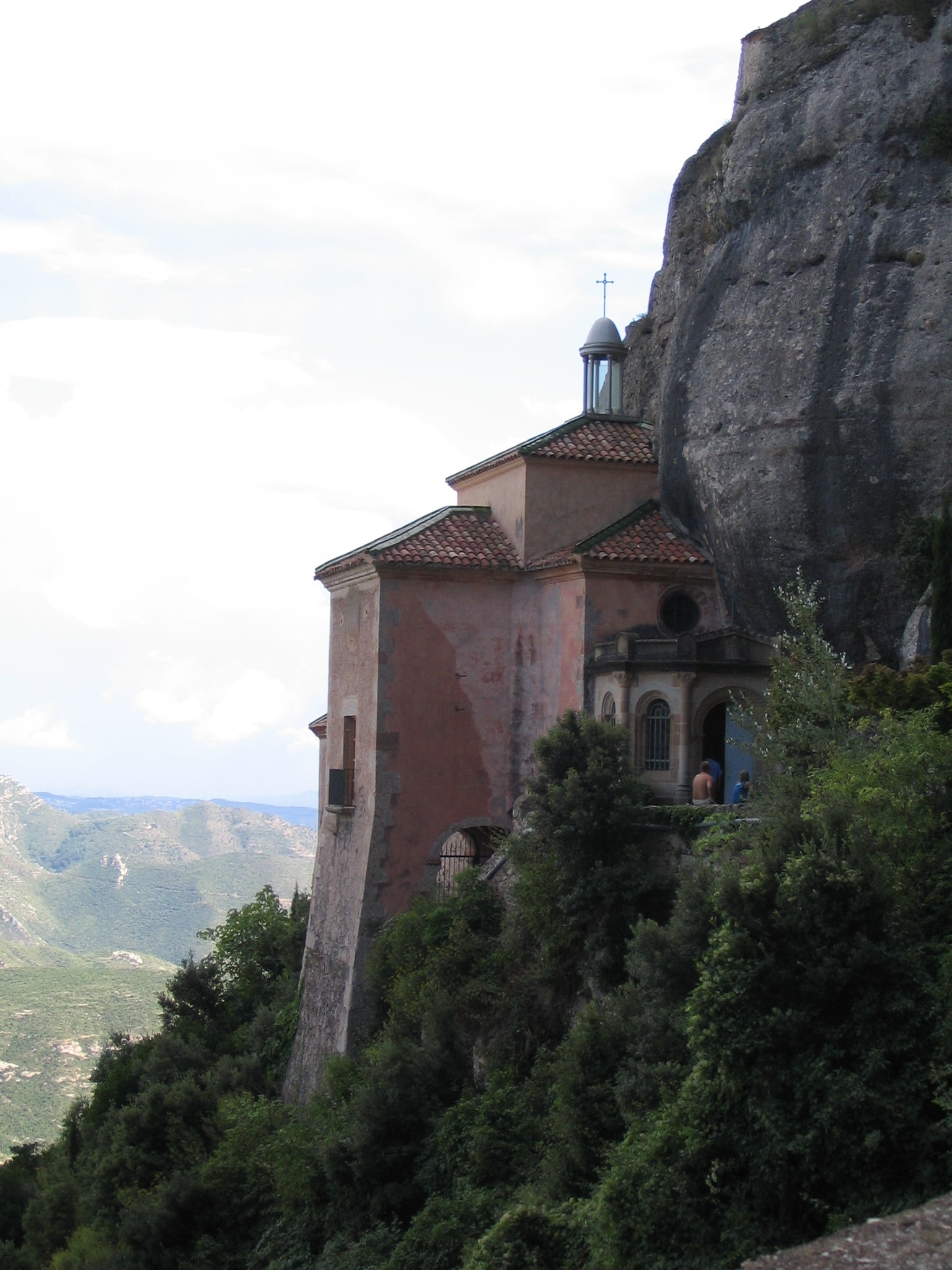
Montserrat
Traditional date 880; first text dated 1239 · Montserrat, Catalonia
A light descends from the sky. Music is heard. A cave is found. The statue now venerated there is some three centuries younger than the story.
Foundation and discovery legend
Also a light in the sky with a sound, also reported through a tradition whose earliest surviving text is centuries later than the event it describes.
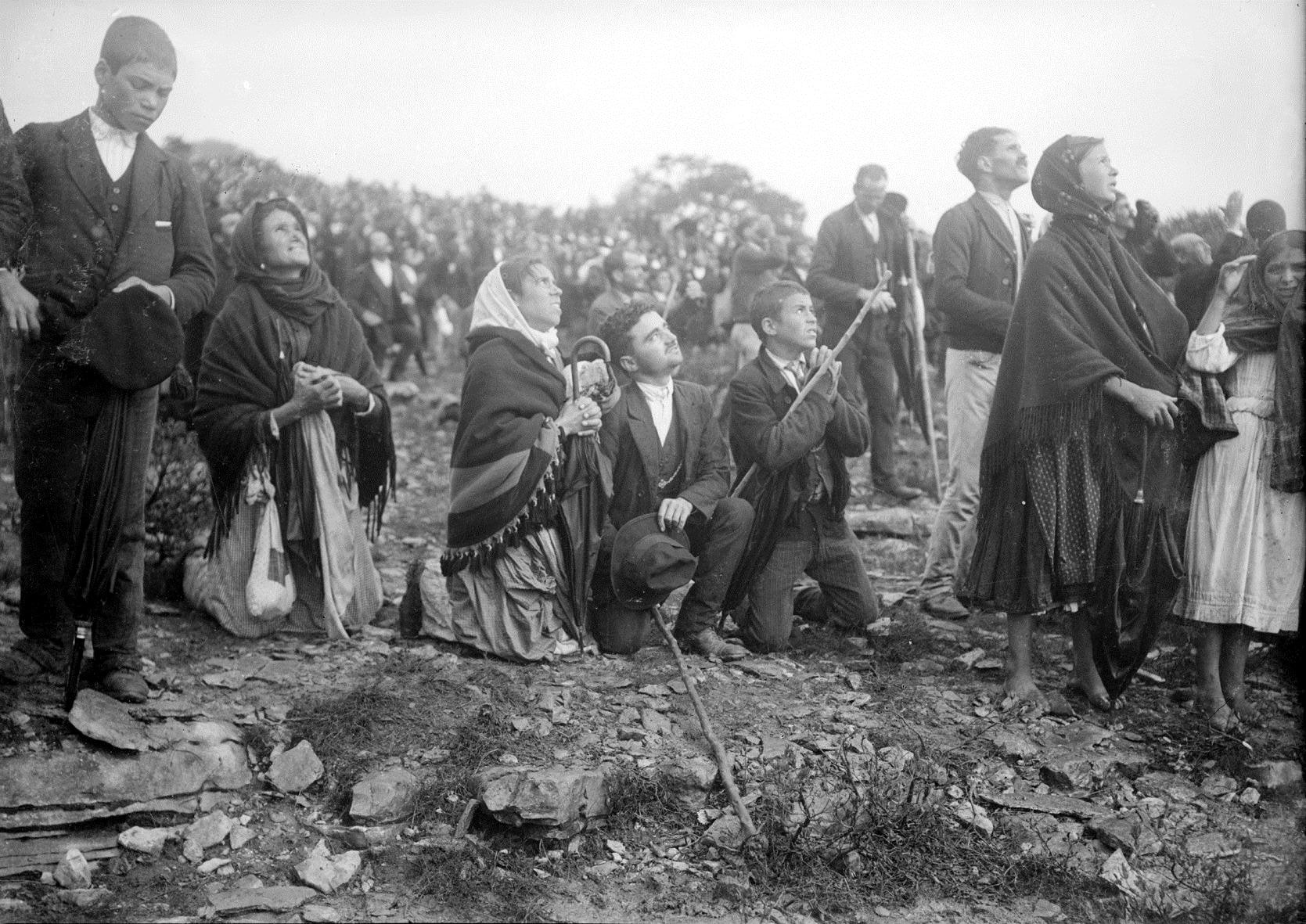
Fátima
May–October 1917 · Cova da Iria, Fátima, Portugal
Three children report repeated apparitions. A crowd gathers expecting a sign. The cameras record the witnesses, not the reported motion of the sun.
Repeated apparition report and crowd event
The same question about the Sun under opposite documentary conditions: named witnesses, a dated afternoon, and photographs of the crowd.

