Medieval Latin and Irish Christianity
St Patrick's Purgatory - the pit at Lough Derg
Accounts from the 12th century onward · Lough Derg, Donegal, Ireland

British Library MS Royal 17 B xliii, 15th century - a pilgrim within the pit.
Source & rights
- What this is
- Depiction from within the tradition
- Object
- Manuscript
- Title
- St John of Bridlington in St Patrick's Purgatory, MS Royal 17 B xliii
- Date
- 15th century
- Held by
- British Library
- Licence
- Public domain
- This copy
- Hosted at the size published by the source; not altered.
- Retrieved
- 2026-08-29
Made within the tradition that transmitted the account, though not by a witness to it.
On an island in Lough Derg in Donegal there was an opening in the ground. From at least the twelfth century, pilgrims travelled across Europe to be shut into it: fasting first, then a night sealed inside, then out at dawn. Some emerged with nothing to say. Others came out with descriptions of what they had passed through, and those descriptions were written down.
The best known is the account of a knight named Owein, recorded in Latin around 1180 by a Cistercian in Huntingdonshire who had it from a monk who had it from Owein. The site was destroyed on papal order in 1497 and pilgrimage resumed anyway; it continues today.
What the source is
A cluster of texts, rather than one: a twelfth-century Latin narrative, its many translations, later pilgrim accounts, and a nineteenth-century scholarly edition that collected them.
What they have in common is a physical place that could be visited, and a procedure - fast, enter, remain, emerge - that could be repeated.
The report
No passage reproduced - Excerpt not published - edition and page not yet verified
Wright's 1844 edition is out of copyright and could be quoted. It is an editor's compilation rather than a primary text, and quoting from it would need that stated on the same line - which requires opening it first.
Why it is in this archive
This is the only entry in the collection where the reported experience had an address, a door, and a queue. People went there deliberately, in known conditions, and a proportion of them reported something.
That makes it the closest thing the medieval material offers to a repeatable protocol, and it is worth being precise about why that is not the same as an experiment. The conditions were extreme and undocumented, the participants had read the earlier accounts, the site had a reputation to maintain, and nobody recorded the pilgrims who emerged with nothing to report.
A geographic site is not an ontological address. That a place reliably produces reports tells you something about the place, the preparation and the expectations - and the question of which is a question about fasting, darkness, sleep and prior reading before it is a question about anything else.
How close is the source?
Carried within a religious literary tradition, with the shaping that implies.
01 · Subject
Owein, a knight
02 · Told to
A monk, Gilbert of Louth
03 · Written by
H. of Saltrey, c. 1180
Who states that he did not hear it from Owein himself.
04 · Translated and reprinted
Into most European vernaculars, repeatedly, for three centuries
05 · Collected by
Thomas Wright, St. Patrick's Purgatory, 1844
A nineteenth-century editor, and not a medieval witness. The distinction is easy to lose in a footnote.
Source gallery
Every image is labelled with what it is evidence for. Select one to see it whole.
Project Nikolaos annotation
Written by this project. Not part of the source, and not a translation of anything in it.
A place that reliably produces reports is interesting. It is interesting first as a place, and only much later as anything else.
Details, provenance and rights
- Experiencer state
- Fasting · Vigil · Awake
- Reported agency
- Multiple personal agencies
- Locomotion claim
- Descent · Guided journey · Return
- Physical trace
- None reported · Unresolved
- Witness or speaker
- Owein, a knight, and later pilgrims
- Recorder / translator
- H. of Saltrey, c. 1180, at two removes; later editors and translators
- Edition
- Thomas Wright, St. Patrick's Purgatory, 1844
- Rights
- May be reproduced from a verified public-domain edition
- Cultural sensitivity
- Context needed
Provenance notes
- The narrative reaches us at a minimum of three removes, and its author says so.
- Wright is a Victorian scholar with Victorian views about medieval Ireland. His editorial framing is not neutral and is not adopted here.
- No pilgrim who reported nothing appears in any of these texts, which is the whole difficulty with the record.
The medieval texts and the 1844 edition are out of copyright.
From the same shelf
Grouped by the tradition that produced them. Nothing here claims they share a cause.
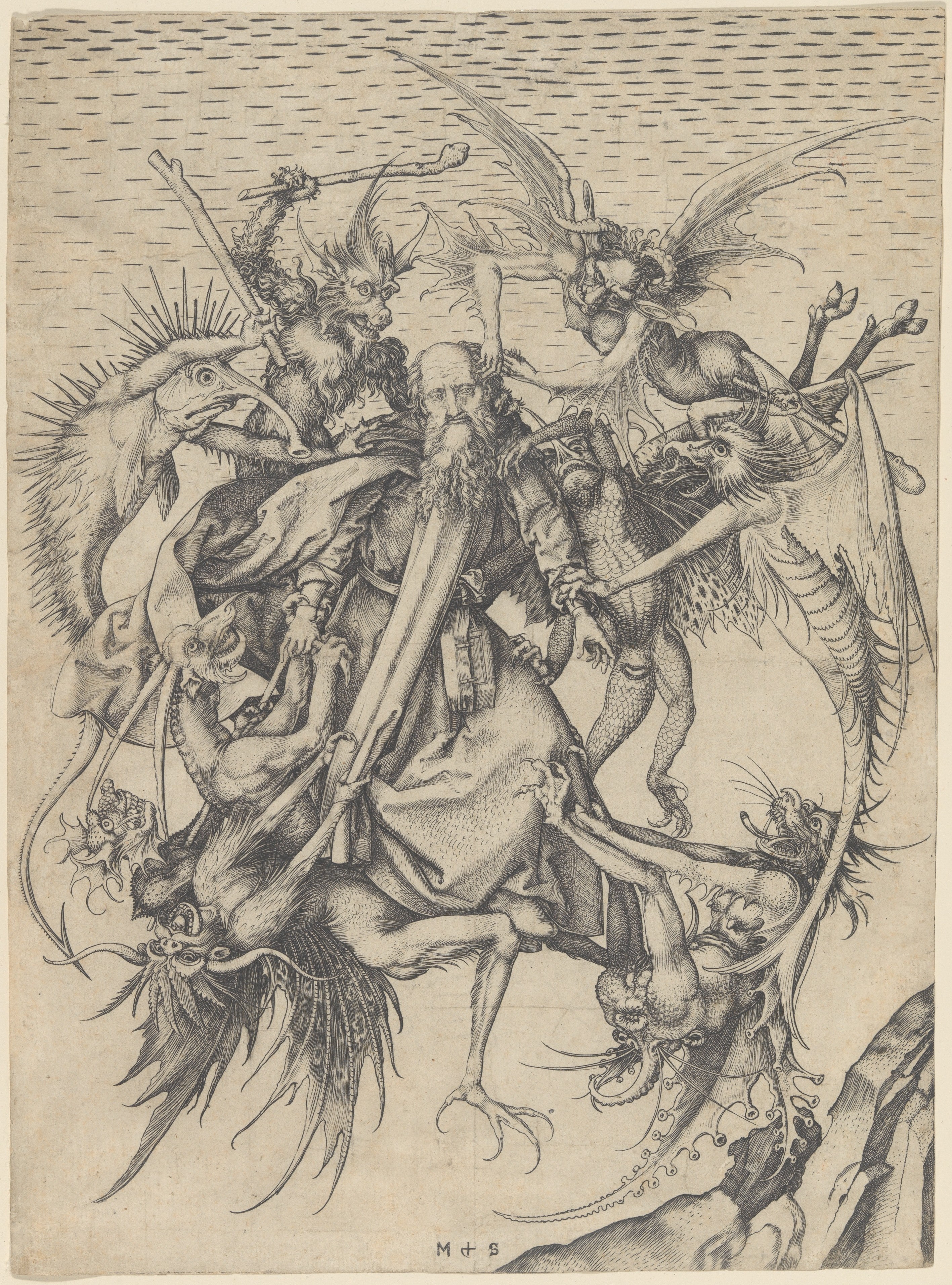
Life of Antony
4th century · Egypt
An Egyptian ascetic is besieged by things that change shape, make predictions, and lie - and is taught how to test them.
Hagiography
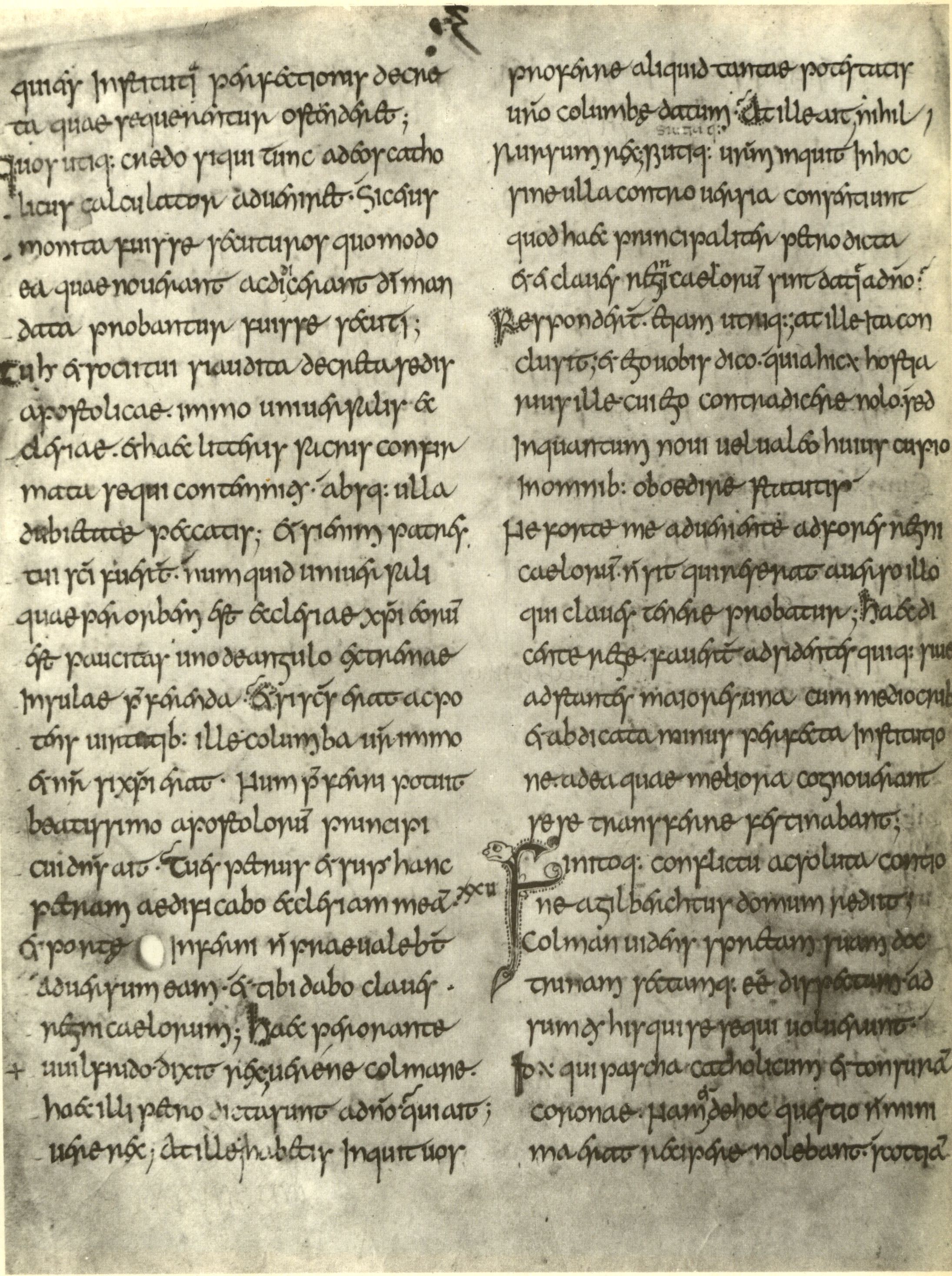
Ecclesiastical History III.19 - the account of Fursey
Event tradition 7th century; Bede writes early 8th century · Ireland, Anglo-Saxon England, the Frankish world
An Irish monk falls ill, is taken out of the body, is burned by something thrown at him - and carries the mark for life.
Monastic history
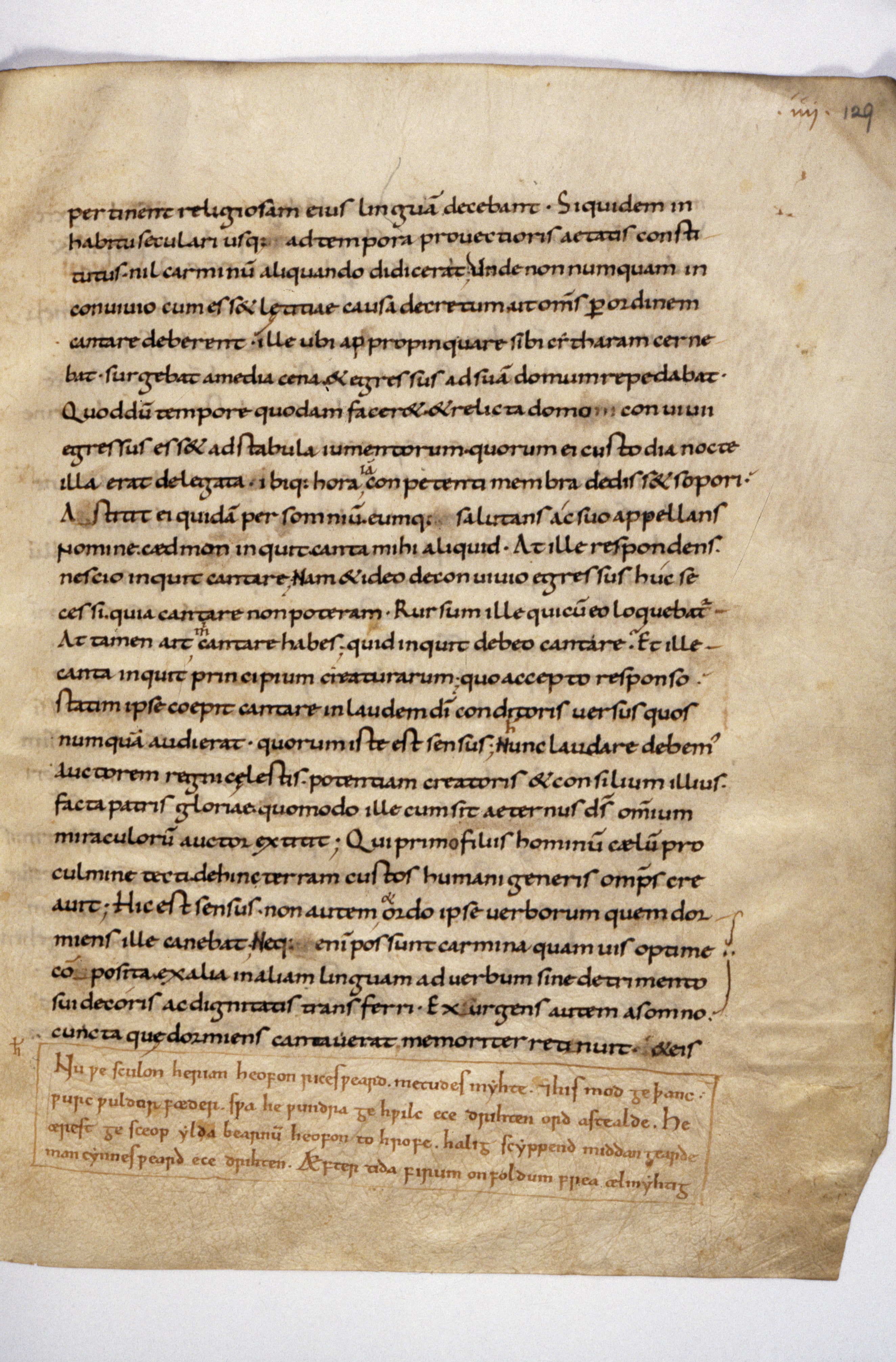
Ecclesiastical History V.12 - the account of Dryhthelm
7th–8th century tradition · Northumbria
A Northumbrian man is thought to have died, revives at dawn, and afterwards stands in a freezing river to pray.
Monastic history


